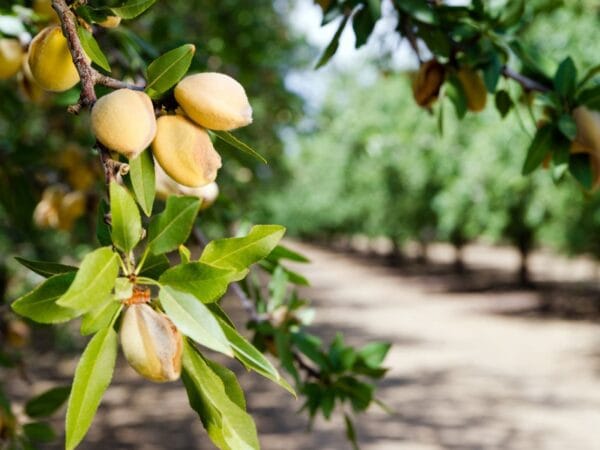
Growing almonds is a structured agricultural process that moves from orchard planning to nut harvest and post-season care. Farmers must carefully balance climate selection, soil preparation, irrigation management, and pollination to achieve consistent yields. Each phase of almond cultivation depends on both biological cycles and human management, making almond farming a combination of natural growth patterns and controlled agricultural practices.
Modern almond production no longer relies only on traditional field observation. Precision agriculture, including satellite imagery, soil analysis, and climate modeling, now help growers monitor orchards at scale. By understanding how almonds grow and how almond nuts grow under different environmental conditions, farmers can improve water efficiency, protect tree health, and increase long-term productivity while reducing resource waste.
What Is the Best Climate to Grow Almonds?
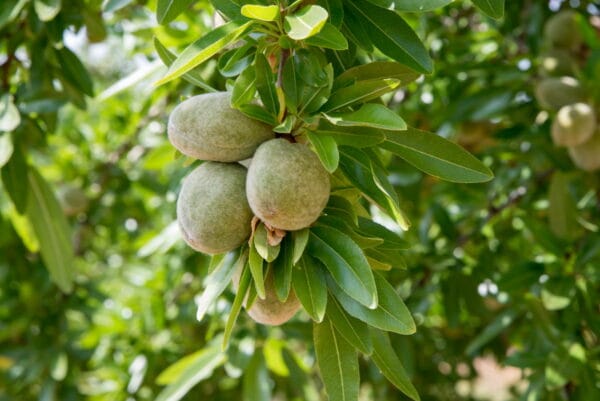
To understand how do almonds grow successfully, climate is the primary limiting factor. Almond trees perform best in warm regions with long, dry summers and mild, wetter winters. These conditions allow proper flowering, pollination, and nut development without exposure to damaging frost or excessive moisture.
Almond trees require a winter chilling period to trigger bud break and flowering. Most varieties need between 250 and 350 hours of temperatures below 7°C (45°F). This chilling requirement explains why almond trees bloom earlier than many other fruit crops and why almonds cannot be grown reliably in tropical regions where winter cold is absent.
Cold and rainy weather during the flowering stage directly reduces yields. Bees, which are responsible for pollination, become less active in cool and wet conditions, leading to weak fruit set. Even short exposure to temperatures below −4°C (25°F) can damage blossoms and prevent nut formation. High humidity during bloom also increases the risk of fungal and bacterial infections, which further limits tree productivity.
Where Do Almonds Grows the Best?
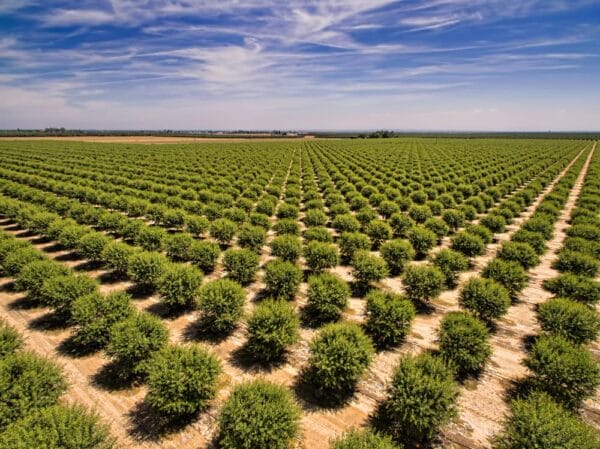
Understanding how is almonds grown on a commercial scale begins with geography. Almond trees are native to regions of the Middle East and thrive in Mediterranean-type climates. Today, major almond-growing countries include Spain, Italy, Greece, Morocco, and Tunisia, where dry summers and abundant sunlight support nut development.
Outside the Mediterranean region, almonds are widely cultivated in the United States, Australia, Chile, Syria, and Iran. In the U.S., orchards are concentrated in USDA Plant Hardiness Zones 7 to 9, particularly in California, Texas, Arizona, Florida, and Hawaii. These areas provide the warmth, sunlight, and managed irrigation systems required for stable almond production.
Best Soil for Growing Almond Trees
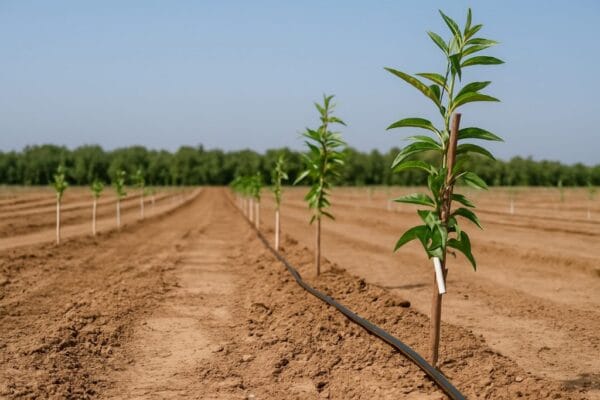
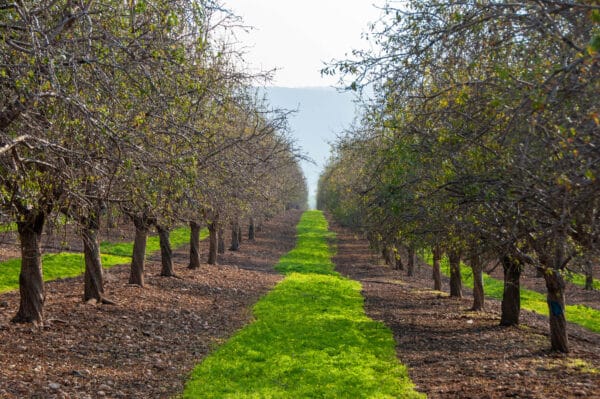
Almond trees grow best in deep, fertile, and well-drained soils such as sandy loam or light clay. Loose soil allows roots to spread easily and improves water and nutrient uptake. Drainage is more important than soil type, because standing water around roots leads to fungal diseases and lower nut yields.
Salinity is a major risk in almond farming. Salt buildup in soil blocks water absorption and weakens nut development. In saline soils, farmers use calcium-based amendments and proper irrigation to flush salts away from the root zone.
Almond trees tolerate a wide pH range from 5.5 to 8.5, but most orchards perform best between 6.5 and 8. Before planting, soil is prepared by loosening compact layers, adding organic matter, and correcting nutrients to support strong root growth.
Key soil needs:
Soil type: Sandy loam to light clay
Drainage: Excellent
Salinity: Low
pH: 5.5–8.5 (ideal 6.5–8)
Orchard Care for Healthy Almond Production
Keeping almond trees productive requires steady care throughout the growing season. Tree health depends on a balance of irrigation, nutrient supply, pest protection, and canopy management. When these factors are handled correctly, trees remain vigorous and capable of producing consistent nut yields year after year.
Smart Irrigation Practices
Although almond trees tolerate dry summer climates, they still need regular watering, especially in regions with low rainfall. Young trees require frequent moisture to establish strong roots, while mature trees need steady irrigation to support flowering and nut development. Soil should remain evenly moist but never waterlogged, as excess water encourages root diseases and fungal infections.
In large orchards, irrigation planning is guided by local climate conditions. Monitoring temperature, rainfall, and evaporation rates helps growers match water supply to actual crop demand. Using field-level weather data and soil moisture tracking reduces overwatering and improves water-use efficiency.
Nutrient Management Strategy
Fertilization begins in early spring when trees enter active growth. Young almond trees respond well to small, regular nitrogen applications throughout the season. As trees mature and begin producing nuts, their fertilizer demand decreases, and a single well-timed nitrogen application can support fruit development and canopy growth.
Instead of applying the same fertilizer rate across an entire orchard, modern farms divide fields into management zones. These zones receive nutrients based on plant health indicators, which lowers fertilizer waste and reduces the risk of nutrient runoff into soil and water systems.
Insect and Disease Protection
Almond orchards face pressure from multiple pests. The navel orangeworm is one of the most damaging insects because it survives inside leftover nuts after harvest. Removing all remaining nuts from trees helps break its life cycle and lowers infestation levels.
Peach tree borers attack the base of the trunk and can weaken trees over time. If growth slows or sawdust-like debris appears near the trunk, biological treatments such as Bacillus thuringiensis are often used to control larvae safely.
Because pest outbreaks can spread quickly, regular field inspections are essential. Early detection allows growers to treat only affected areas instead of spraying the entire orchard, saving costs and reducing environmental impact.
Digital Crop Monitoring for Large Orchards
On large farms, visual inspection alone is not enough to track tree health. Satellite-based vegetation analysis helps identify stress patterns caused by pests, disease, or water shortages. When abnormal growth appears in specific zones, field scouts can be sent directly to those locations for confirmation.
This targeted approach improves response time and limits unnecessary pesticide use. By combining field scouting with digital crop data, growers maintain healthier trees while lowering overall management costs.
Disease Prevention in Almond Orchards
Protecting almond trees from disease starts with preventive care rather than treatment. Moisture control is one of the most important factors. Irrigation should be directed at the soil surface instead of sprayed over leaves and fruit, because wet foliage creates ideal conditions for fungal infections.
Fungicide programs are also used as a preventive measure, but rotating active ingredients is essential to avoid resistance buildup. Pruning introduces open wounds into the tree structure, which increases infection risk, so all cutting tools should be cleaned and disinfected regularly to prevent pathogens from spreading between trees.
Structural Pruning and Canopy Control
Pruning plays different roles as almond trees mature. In young trees, it helps establish strong scaffold branches and controls height for easier management. This early shaping supports better sunlight penetration and improves future nut quality.
For mature trees, pruning focuses on maintaining the existing form and keeping the canopy balanced. Reducing canopy volume by about 20 percent each year helps renew growth and sustain productivity. The ideal pruning window is after harvest and during dry weather, since rain increases the risk of fungal entry through fresh cuts.
Almond Harvest Operations
Harvesting almonds requires careful timing and specialized equipment to protect nut quality and orchard health. Growers monitor crop maturity closely and aim to minimize dust, waste, and environmental disturbance during the process.
Optimal Harvest Timing
Almonds are usually harvested from early August through late September, depending on variety and climate. Harvest begins when most hulls naturally split open, starting at the top of the tree and moving downward. Fallen nuts on the ground are another indicator that the crop is ready.
From planting to full production, an almond tree typically takes between 5 and 20 years to reach consistent fruiting levels, depending on management and growing conditions.
Mechanical Harvesting Process
Harvest begins with tree shakers that loosen nuts from branches. The almonds are left to dry inside their shells for about one week. After drying, sweepers collect the nuts into rows, and pickup machines vacuum them into transport carts.
This cycle is often repeated several times in one season because different almond varieties mature at different rates. During this stage, trees also begin forming buds for the following year’s crop, which makes post-harvest irrigation and nutrition especially important for long-term orchard productivity.
What to Do After Almond Harvest
Harvesting almonds is not the final step in orchard management. Trees must be supported after harvest so they can rebuild energy reserves and prepare for the next flowering cycle. At the same time, harvested nuts need proper handling to protect quality and reduce losses during storage.
Post-Harvest Tree Management
After harvest, almond trees shift their energy toward root recovery and bud development for the next season. This stage strongly influences future yield and tree health.
Irrigation: Trees should continue to receive water after harvest to prevent early leaf drop. Keeping leaves active allows nutrients such as nitrogen, potassium, and phosphorus to move into fruiting spurs for next year’s bloom.
Nitrogen supply: Around 20 to 25 percent of the annual nitrogen requirement is usually applied after harvest. Nitrogen may be combined with calcium or potassium to support nutrient balance and root recovery.
Corrective pruning: With nuts removed, weak, diseased, or damaged branches become easy to identify. These should be cut back several inches beyond infected tissue to reduce disease carryover into the next season.
Post-Harvest Nut Handling
Once collected, almonds are transported to processing facilities where they are cleaned and separated from debris. Modern systems reuse by-products efficiently, with hulls commonly used as livestock feed and shells repurposed for bedding or fuel.
Clean nuts are graded by size and then stored under controlled temperature and humidity conditions. Proper storage prevents mold growth, protects kernel quality, and ensures almonds remain suitable for long-term marketing and processing.
Almond Growth Stages Explained (Month-by-Month)
- Almond trees follow a clearly defined annual growth cycle. Understanding these stages helps farmers time irrigation, fertilization, and pest control accurately.
- Dormancy occurs during winter months when trees shed leaves and store energy. During this stage, sufficient chilling hours are critical for uniform flowering later.
- Bud break begins as temperatures rise toward the end of winter. Flower buds swell and prepare to open, making trees sensitive to frost damage.
- Flowering follows shortly after bud break, usually in late winter or early spring. This is the most critical stage, as successful bee pollination determines final yield.
- Fruit set happens when pollinated flowers begin forming young nuts. Poor weather or weak pollination at this stage leads to nut drop.
- Kernel fill takes place through spring and early summer. During this period, the almond kernel gains size, oil content, and weight, making water and nutrient availability essential.
- Hull split occurs in late summer when the outer hull dries and opens. This signals that nuts are approaching maturity.
- Harvest begins once most hulls are fully split. Trees are shaken mechanically, allowing nuts to fall for collection.
- Post harvest recovery follows harvest and continues into autumn. Trees rebuild carbohydrate reserves, which directly affect flowering and yield in the next season.
How Long Do Almonds Take to Grow
Almond trees take several years to move from planting to full nut production. In the first 1 to 3 years, the tree focuses on root and branch growth and does not produce a commercial harvest. Between 3 and 5 years, the tree begins to produce its first almonds, but yields are still low and inconsistent. Full productivity is usually reached after 7 to 15 years, when the tree canopy is fully developed and flowering becomes stable each season.
An almond tree can remain productive for 20 to 25 years or more if managed well with proper irrigation, pruning, and pest control. Climate, soil quality, and farming practices strongly influence how fast almonds grow and how soon almond nuts develop. Warm regions with mild winters and good pollination allow trees to mature faster, while frost, poor soil, or water stress can delay nut production.
Common Problems When Growing Almonds
- Almond farming faces several biological and environmental challenges that directly affect yield and quality.
- Water stress is one of the most common issues. Both under irrigation and over irrigation reduce kernel size and increase disease risk.
- Frost damage during flowering can destroy blossoms within hours, leading to severe crop loss for the entire season.
- Poor pollination occurs when bee activity is low due to cold, rain, or insufficient hive placement. This results in flower drop and uneven nut set.
- Soil salinity restricts root water uptake and causes leaf burn, reducing photosynthesis and long term productivity.
- Fungal diseases such as blossom blight and hull rot thrive in humid conditions and poorly managed orchards.
- Pest attacks from insects like navel orangeworm damage developing nuts and reduce market quality.
- Yield decline often results from a combination of aging trees, nutrient imbalance, and accumulated stress over multiple seasons.
Sustainable Almond Farming Practices
- Sustainable almond farming focuses on maintaining productivity while reducing environmental impact. Many modern orchards now adopt practices that improve soil health and water efficiency.
- Drip irrigation systems deliver water directly to the root zone, reducing waste and improving water use efficiency.
- Soil regeneration through organic matter additions improves microbial activity, root growth, and nutrient availability.
- Cover crops planted between rows reduce erosion, suppress weeds, and improve soil structure over time.
- Organic inputs such as compost and bio fertilizers help reduce dependency on synthetic chemicals while maintaining soil fertility.
- Water footprint reduction strategies include irrigation scheduling based on plant demand rather than fixed calendars.
- Carbon footprint management involves efficient machinery use, reduced fuel consumption, and improved orchard longevity.
How Technology Helps Farmers Grow Almonds Better
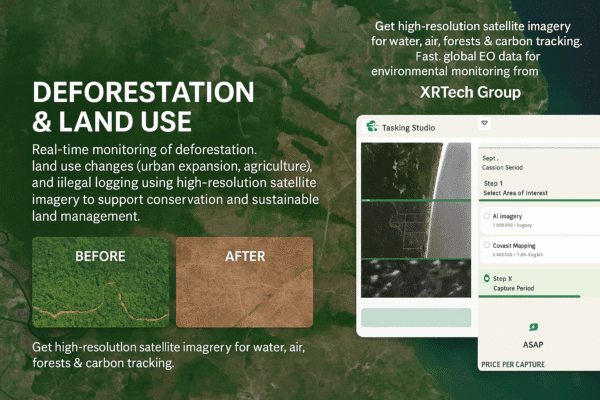
- Technology has become a key advantage in modern almond farming, especially for large scale orchards. XRTech solutions support data driven decision making throughout the season.
- Satellite crop monitoring allows farmers to observe orchard performance across large areas without physical inspections.
- NDVI health mapping identifies stressed zones within orchards before visible symptoms appear.
- Flowering stage detection helps farmers time bee placement and frost protection measures more accurately.
- Irrigation stress mapping highlights areas receiving too much or too little water, improving water efficiency.
- Disease hotspot identification enables targeted treatment instead of blanket spraying.
- Yield estimation tools support better harvest planning, labor allocation, and market forecasting. Contact us Now.
Almond Yield per Tree and per Acre
- Almond yield varies widely depending on climate, soil quality, water availability, and orchard management.
- Average yields in well managed orchards typically range from 15 to 25 kilograms of kernels per mature tree. On a per acre basis, commercial yields often range between 800 and 2,500 pounds of kernels.
- Yield factors include tree age, variety selection, pollination success, and pest control effectiveness.
- Climate impact is significant, as frost events and heat stress directly reduce nut set and kernel quality.
- Soil fertility influences root development and nutrient uptake, affecting both yield and nut size.
- Water usage impact is critical, since consistent and properly timed irrigation supports kernel fill and overall productivity.
Global Almond Production and Market Overview
Global almond production has expanded rapidly in recent years, with the United States leading the industry by a wide margin. In 2024, total worldwide output reached about 1.74 million metric tons, up from 1.66 million tons in 2023. Growth is largely fueled by rising demand for plant-based protein foods and healthy snack options, pushing the almond market toward an estimated value of $13.2 billion by 2030.
The United States remains the dominant producer, supplying more than 76 percent of global almonds, with roughly 1.24 million metric tons harvested during the 2024–2025 season. Within the U.S., California accounts for over 98 percent of national production, supported by approximately 1.38 million acres of almond orchards. Australia ranks as the second-largest producer, with projected 2025 output near 155,697 tonnes (kernel weight), while Spain leads European production with about 384,000 metric tons in 2024. Overall demand for almonds increased by 6.8 percent in 2024, with nearly half of total consumption coming from direct edible uses.
From a commercial perspective, the global almond market was valued at around $9.9 billion in 2025, with long-term growth forecasts ranging between 4.5 and 5.7 percent annually through 2033. The United States is the world’s largest exporter, shipping more than 625,000 metric tons in 2024, followed by Spain and Australia. Major importing countries include India, China, and Germany, which rely heavily on California almond supplies.
In terms of product demand, shelled almonds dominate global consumption, representing about 76 percent of the market, while processed almond products continue to expand. Almond milk, in particular, showed strong momentum in Asia, with consumption in China rising by 19 percent in 2024. Processing and distribution are led by major industry players such as Blue Diamond Growers, which handled over 550,000 metric tons in 2024, and Wonderful Pistachios & Almonds, which processed more than 470,000 metric tons, reflecting the scale and consolidation of modern almond production.
Environmental Impact of Growing Almonds and Sustainable Solutions (2026 Update)
Is growing almonds harmful to the environment? By 2026, almond farming is still associated with environmental pressure, mainly due to high water demand, chemical inputs, and carbon emissions linked to global transport. Almond orchards are often located in dry regions such as California and parts of the Mediterranean, where water scarcity is already a concern. Because almond trees require steady irrigation to maintain yields, large-scale production can intensify stress on local water supplies, especially during prolonged drought cycles.
Chemical use remains another challenge. Fertilizers, herbicides, and pesticides can affect soil structure and reduce biodiversity if applied excessively. Pollinators, particularly honey bees and wild bees, are vulnerable to these chemicals, which threatens both crop productivity and surrounding ecosystems. Runoff from treated fields can also carry residues into nearby waterways, contributing to soil degradation and water pollution.
Carbon footprint is also part of the equation. The United States still produces the majority of the world’s almonds, and a large share of the harvest is exported to Asia and Europe. Long-distance shipping and processing add to greenhouse gas emissions, making almonds part of the broader climate impact of global food supply chains.
At the same time, the industry has made measurable progress toward sustainability by 2026. Several practices are now widely adopted to reduce environmental harm:
Precision irrigation systems such as drip and micro-sprinklers are replacing flood irrigation in many orchards. These systems deliver water directly to the root zone, cutting evaporation losses and improving water-use efficiency.
Regenerative farming methods are expanding, including cover cropping, compost application, and reduced chemical dependency. These practices improve soil organic matter, increase water retention, and support beneficial insects and microbes.
Whole Orchard Recycling (WOR) is increasingly used when orchards are replanted. Old trees are chipped and returned to the soil as mulch instead of being burned, which improves carbon storage, boosts soil fertility, and reduces air pollution.
By 2026, satellite-based crop monitoring and soil moisture mapping are also helping farmers fine-tune irrigation and fertilizer use, lowering waste and environmental risk.
If these sustainable methods continue to scale, almond farming can move closer to a balance between productivity and environmental responsibility. With better water management, healthier soils, and lower emissions, the future of almond cultivation can support ecosystems while remaining economically viable for growers.
Blog Summay
How do almonds grow: Almonds grow on trees that flower in early spring, get pollinated by bees, and then form nuts inside a hull and hard shell.
How does almonds grow in farms: Almond trees are planted in orchards with controlled irrigation, soil management, and managed pollination to increase yield.
How do almond nuts grow: After pollination, the flower becomes a fruit, the kernel fills inside the shell, and the hull splits when the nut is mature.
How is almonds grown commercially: Farmers prepare orchards, select grafted varieties, space trees in rows, and manage water and nutrients through the season.
Best conditions for growing almonds: Almonds grow best in warm, dry climates with mild winters and well-drained, fertile soil.
How long do almonds take to grow: Trees take about 3–5 years to produce nuts and reach peak production between 7 and 15 years.
Common problems when growing almonds: Water stress, frost during flowering, poor pollination, soil salinity, pests, and fungal diseases reduce yield.
Sustainable almond farming: Drip irrigation, healthy soils, reduced chemicals, and crop monitoring technology help farmers grow almonds with less water and lower environmental impact.