Ultra-High-Resolution Satellite Imagery: A Management Guide
The Future of Ultra-High-Resolution Satellite Imagery Management Ultra-high-resolution satellite imagery is changing the way organisations understand and analyse the Earth.

The world is more connected and more monitored with satellite data than at any point in human history. Governments need a continuous flow of information about territories, infrastructure and borders. Businesses need full situational awareness over large operating areas. Militaries need persistent intelligence on assets and activity. And climate scientists need consistent, high-frequency data on a changing planet.
The technology that is making all of this possible is 30 cm satellite imagery. And in recent times, that technology has moved from a niche capability available to a handful of governments and large defense contractors into a commercially accessible product that engineers, planners, analysts and project managers can order online.
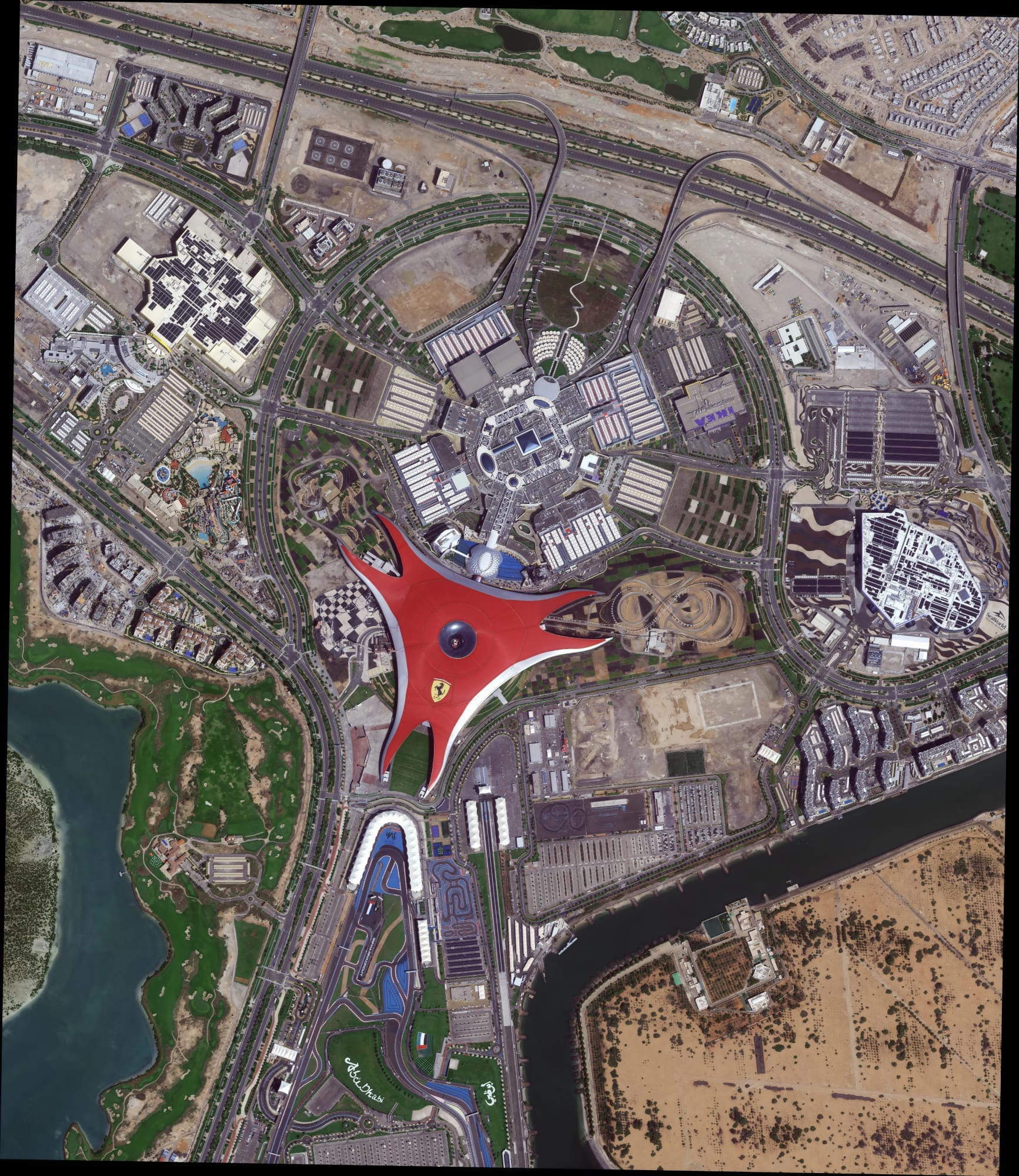
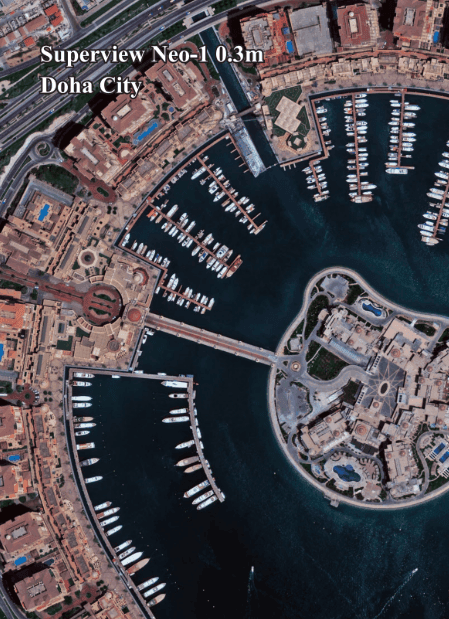
This post covers what is driving that shift, which satellites are delivering it, and why the SuperView Neo constellation from China Siwei, accessible through XRTech Group in the Middle East, Africa and Asia, represents the most practical entry point into true native 30 cm satellite data today.
The commercial satellite imagery market was valued at $3.27 billion in 2022. It is projected to reach $14.18 billion by 2030. The main driver is resolution. As sensors get sharper, new commercial use cases open up that were previously impossible or too expensive to serve from orbit.
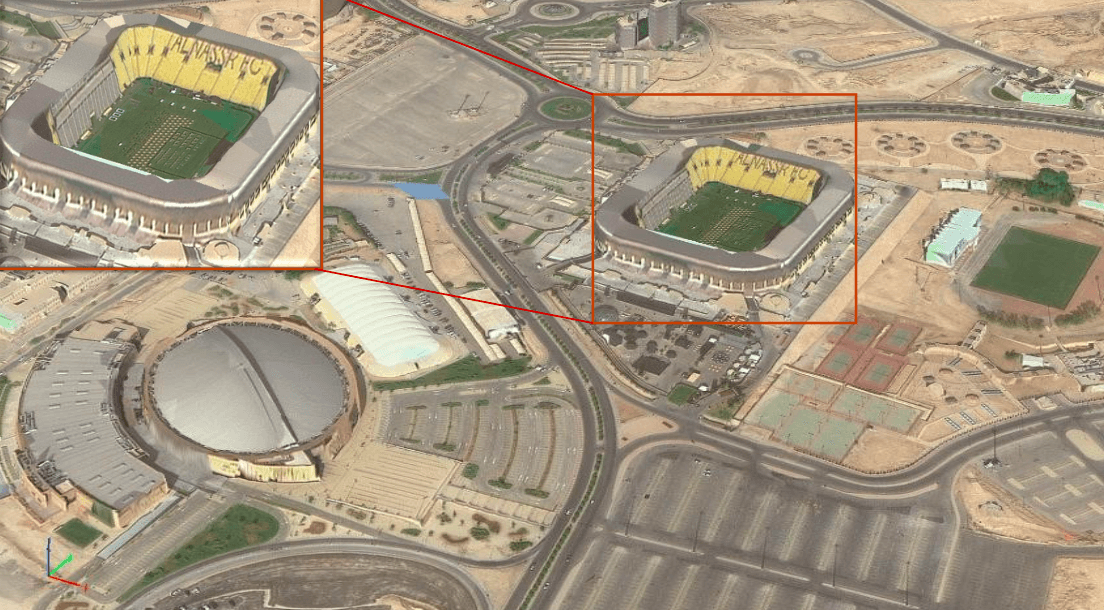
30cm resolution represents a significant leap in image clarity when compared to 50cm or 70cm data, not to mention the lower resolution imagery that dominated the market for decades. The higher resolution lets users identify objects on the ground with far greater accuracy, which opens a whole range of new use cases that simply do not work at 1 metre or worse.
For example, in construction monitoring and industrial inspection, 30cm data means companies can gather the same quality of data they used to rely on drones or aircraft for, but using satellites instead. This makes a significant difference when the area being mapped exceeds 20km² to 30km² because drone and aircraft coverage becomes prohibitively expensive at that scale. Satellites cover those same areas in a single pass at a fraction of the cost.
When the revisit rate for a given area of interest reaches every few hours, this also opens new commercial use cases where rapid change detection is critical. Port management, traffic monitoring, construction progress tracking, pipeline inspection and border surveillance all become viable satellite workflows at that revisit frequency.
30 cm satellite imagery data is a force multiplier for the industry. When used effectively, it changes how satellite imagery is captured, processed and applied across sectors.
What was once a capability held by a small number of Western satellites is now being built simultaneously by operators across Europe, the United States, Israel, South Korea and China. The ecosystem is seeing established operators launching next-generation 30cm satellites while newer players scale up from lower-resolution systems to capture the commercial opportunity.
Here is a current overview of the key 30cm and sub-50cm satellite providers
The amount of development in this space is staggering. The result of fleet upgrades from incumbent operators and new satellites from emerging players will be nearly 10 times the number of very high resolution satellites in orbit by the end of the decade, with forecasts pointing to more than 100 operational VHR satellites.
For buyers in the Middle East, Africa and Asia, most of these constellations come with a catch: US export controls. WorldView Legion and Planet’s commercial assets are subject to ITAR and EAR export restrictions. Pléiades Neo is a European product with its own distribution constraints. SuperView Neo from China Siwei, accessed through XRTech Group, carries none of these restrictions for buyers in the region.
30cm satellite imagery does not just give you a better picture of what exists. It opens specific workflows that are not possible at lower resolutions.
Here is a breakdown of the commercial use cases that 30cm data unlocks compared to what lower-resolution imagery can deliver.
| Use Case | Minimum Useful Resolution | Why 30cm Makes the Difference |
|---|---|---|
| Vehicle identification and counting | 30cm | Distinguish vehicle types, count assets at facilities, track movements |
| Construction progress monitoring | 30cm to 50cm | Resolve foundation works, equipment positions, structural detail |
| Port management and maritime | 30cm to 50cm | Identify vessel types, track loading activity, detect mooring changes |
| Pipeline and infrastructure inspection | 30cm | Detect encroachments, excavation, access activity along linear corridors |
| GEOINT and intelligence analysis | 30cm | NIIRS 6.0 class — identify military equipment, track activity at facilities |
| 3D city modelling from stereo | 30cm to 50cm | Sub-metre building footprint extraction, accurate elevation models |
| Agricultural crop disease detection | 1m to 5m | Spectral analysis works at lower resolution but 30cm adds spatial precision |
| Disaster damage assessment | 30cm to 1m | Resolve individual damaged structures, debris fields, access route status |
| AI training datasets | 30cm | True native pixels required for object detection model reliability |
The critical threshold is the jump from 50cm to 30cm. Most people do not realise that 30cm resolution, potentially enhanced with super-resolution AI algorithms, is sufficient to address 90 percent of their needs and solve most challenges across industrial use cases. Until that is more widely understood, many organizations will continue to underinvest in resolution when a relatively small price increase per km² would unlock significantly more valuable outputs.
One limitation of the current generation of high-resolution satellites is revisit frequency. With the satellites in orbit today, you can observe a given location 2 to 3 times a day with 30cm to 50cm imagery, as long as there is no cloud coverage. That is useful but not sufficient for many advanced monitoring applications.
As the number of satellites grows, that revisit frequency improves. Maxar’s WorldView Legion constellation, with 6 satellites launched through 2024, is designed to deliver up to 15 revisits per day over target areas with 29cm resolution. Planet’s Pelican constellation is being designed for even higher revisit rates. And SuperView Neo’s full 28-satellite architecture will push revisit frequency well beyond what current operations support.
When revisit reaches every hour or multiple times per hour, entirely new workflows become practical.
Traffic flow analysis from orbit rather than fixed camera networks. Port throughput monitoring updated throughout the working day. Construction progress tracked not weekly but hourly. Pipeline encroachment detected within hours of activity starting rather than days or weeks later.
That shift from daily revisit to hourly revisit is what will define the next phase of the 30cm satellite industry. The infrastructure is being built right now.
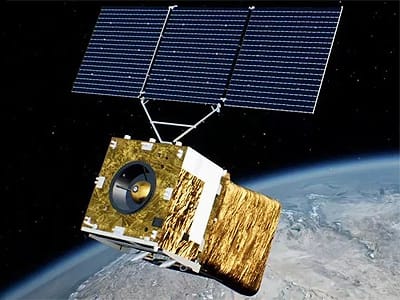
For XRTech Group clients who need the best available revisit today, the combination of 4 operational SuperView Neo-1 satellites and 2 SuperView Neo-3 satellites provides the densest archive and most frequent tasking windows available without US export constraints in the region.
30cm satellite imagery is not a complete solution to every geospatial challenge. There are real limitations that any serious buyer needs to understand before committing to a workflow.
Cloud cover. Optical satellites including SuperView Neo cannot see through cloud cover. For regions with persistent cloud, cloud cover guarantees and SAR satellite imagery become important. XRTech Group provides SAR data from the SuperView Neo-2 constellation at 0.5m resolution, which works through cloud cover, rain and darkness. For the Middle East and much of Africa and Asia where clear skies are common, optical 30cm data is reliable for most of the year. A cloud cover guarantee can be added to any optical tasking order at an additional $8/km² for a 10 percent threshold or $15/km² for 5 percent.
Data volume and processing. 30cm satellite data generates large file sizes. A 100km² order at 30cm panchromatic resolution produces a substantial data volume that requires proper storage and GIS processing capability. XRTech Group delivers data as cloud-optimised GeoTIFF and can provide Level 2A orthorectified products ready for direct GIS import without additional processing.
Cost versus lower resolution alternatives. Archive 30cm imagery from XRTech starts at $20/km², while archive 2m imagery starts at $1/km². For large area projects that do not require object-level identification, lower resolution data is often the right choice. The key is matching the resolution to the specific analytical question rather than always defaulting to the finest option available.
Integration with existing systems. Moving from free imagery or coarser commercial data to true 30cm native satellite imagery requires updating workflows, storage and often staff skills. This integration effort is real but manageable. XRTech Group delivers standard GeoTIFF formats compatible with ArcGIS, QGIS, ENVI and most standard GIS platforms.
The 30cm is good enough question. A related challenge is convincing some users that 30cm is sufficient when they believe they need 10cm or better. For most commercial applications, 30cm enhanced with AI super-resolution post-processing can reach a readability equivalent to 15cm. That covers the vast majority of real-world use cases without the cost and complexity of sub-30cm collection.
XRTech Group publishes fixed, transparent pricing for all SuperView Neo products with no hidden fees, no subscription requirements and no export licence surcharges for buyers in the Middle East, Africa and Asia.
| Order Type | Price per km² | Min. Area | Delivery |
|---|---|---|---|
| Archive optical (30cm, 90+ days old) | $20 | 25 km² | 48 hours |
| Standard new tasking (30cm) | $30 | 100 km² | Under 7 days |
| Priority new tasking (30cm) | $45 | 100 km² | Faster than standard |
| Emergency tasking (30cm) | $80 | 100 km² | Within 24 hours |
| Stereo tasking (for DEM/3D models) | 2× mono rate | 100 km² | Under 21 days |
| SAR satellite imagery (all-weather) | Contact for quote | 100 km² | Under 7 days |