Ultra-High-Resolution Satellite Imagery: A Management Guide

The Future of Ultra-High-Resolution Satellite Imagery Management

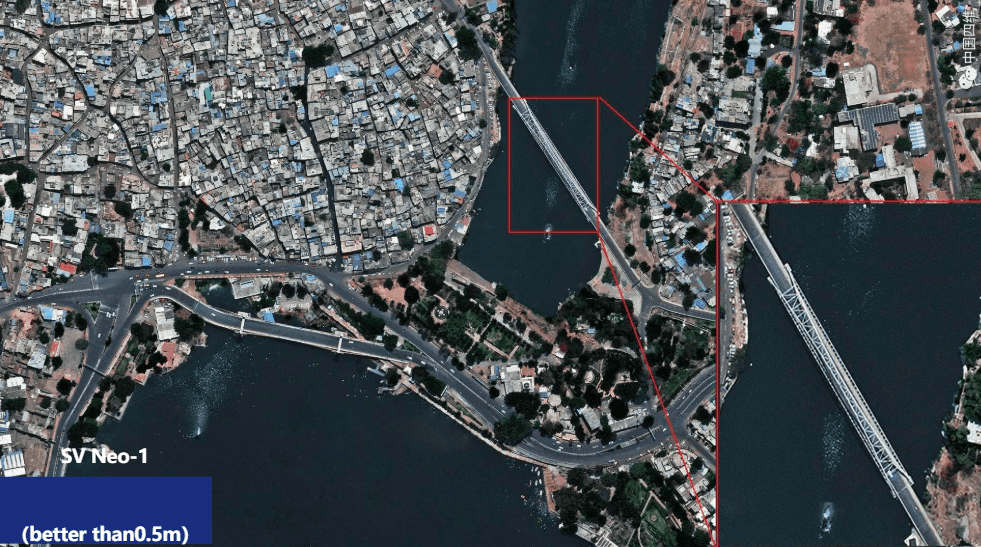
Bhopal, India - XRTech satellite imagery ordering platform — real-time EO satellite tasking interface to buy satellite images online

Ultra-high-resolution satellite imagery is changing the way organisations understand and analyse the Earth. UHR imagery can now be collected at 30cm per pixel and enhanced to 15cm with HD processing. That level of detail opens new possibilities across defence, urban planning, construction monitoring, environmental tracking and commercial mapping.

But with better imagery comes bigger data. Managing it efficiently is now one of the most important challenges for anyone who works with satellite data regularly.

This post covers what UHR imagery is, why managing it has become harder, and how XRTech Group delivers 30cm and 15cm satellite data in formats that work with the tools your team already uses.

 

What Is Ultra-High-Resolution Satellite Imagery?

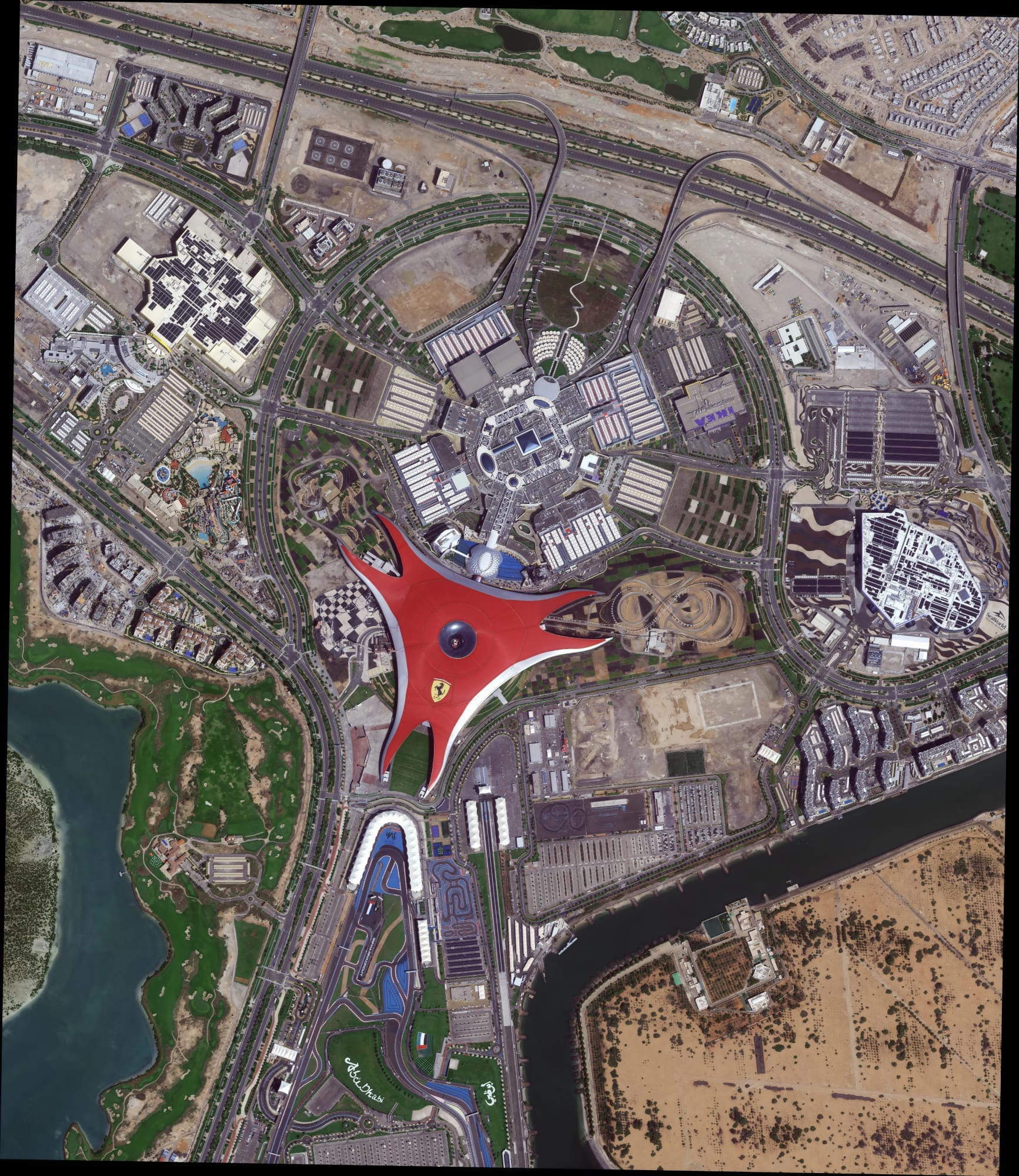
High resolution of Doha, Qatar, by SuperView NEO-1 satellite imagery showing detailed urban landscape with roads, buildings, vehicles, and infrastructure captured at 30 cm spatial resolution for geospatial analysis and mapping
Very high resolution satellite image from SuperView NEO-1 displaying urban roads, buildings, and vehicles, Boats in Doha, Qatar with 30 cm accuracy, ideal for mapping, infrastructure monitoring, and geospatial intelligence

Ultra-high-resolution satellite imagery sits at the finest end of what commercial satellites can produce. Imagery at 15cm or better per pixel is classified as UHR. Very high resolution imagery at 16 to 49cm per pixel, including 30cm, sits just below that class and is used for most of the same applications.

At 30cm, each pixel represents a 0.3m by 0.3m area on the ground. You can identify vehicle types, read road markings, track construction progress and resolve individual infrastructure components. At 15cm HD, edges become sharper and fine features stand out more clearly.

The SuperView Neo-1 satellites from China Siwei, delivered through XRTech Group, capture at 0.3m ground sample distance natively on the sensor. The upgraded Neo-1 03 and 04 satellites, launched in February 2025, push that native resolution to 25cm. With HD processing applied to the true native 30cm source, 15cm output is available for projects that need the finest possible clarity.

Archive 30cm imagery from XRTech starts at $20 per km² and is delivered within 48 hours. New satellite tasking starts at $30 per km² and is delivered in under 7 days. Visit the buy 30cm satellite imagery page for pricing details.


The Growing Challenge of Managing UHR Imagery

Each day, satellites collect terabytes of Earth observation data. A single UHR scene at 30cm can range from 1GB to several GB depending on the area covered and the number of spectral bands included. Multiply that across a large monitoring project, multiple dates, multiple areas, and the data volume becomes significant.

Organisations running UHR satellite workflows regularly face these challenges.

ChallengeWhat it means in practice
Storage cost and scalabilityLarge file sizes require substantial cloud or on-site storage infrastructure
Bandwidth limitsTransferring multi-GB scenes between teams or systems is slow and expensive
Slow visualisationLoading a full-resolution UHR scene in a GIS platform takes time without proper tiling
Platform compatibilityNot every GIS or remote sensing tool handles every image format well
Long-term archivingStoring high-value imagery in a way that stays accessible for years requires careful planning
AI processing pipelinesMachine learning models need fast pixel-level access and multi-band support

These are not edge cases. They affect every organisation that buys or uses UHR satellite data regularly. And as resolution keeps improving and archive depths grow, the challenge only gets bigger.


Key Trends Shaping How UHR Imagery Is Managed

Cloud-Native Delivery

Geospatial workflows are moving into the cloud. Users no longer want to download a complete file just to view or analyse a small part of it. They want to access only the area they need, at the resolution they need it, when they need it.

Cloud Optimized GeoTIFF, known as COG, is the standard that makes this possible. COG is an OGC-approved standard, formally published in July 2023. It is a regular GeoTIFF file with an internal structure that allows software to request only the specific tiles or overview levels it needs through standard HTTP range requests.

COG-aware software can stream just the portion of data that it needs, improving processing times and creating real-time workflows previously not possible. XRTech Group delivers all imagery as cloud-optimised GeoTIFF by default, which means your team can start working with the data in QGIS, ArcGIS or any cloud platform without downloading the entire file first.

Planet provides all its data as Cloud Optimized GeoTIFFs. Maxar delivers tiled COGs through its Analysis Ready Data product line. XRTech Group does the same for SuperView Neo data across all resolution tiers.

Intelligent Compression

Compression reduces file size without reducing what matters in the image. For UHR imagery, even a small improvement in compression efficiency produces very significant savings when scaled across large areas or long-term archives.

The key is lossless or near-lossless compression that keeps measurement accuracy intact. A compressed file that looks visually clean but has degraded pixel values is a problem for any analytical workflow that depends on radiometric accuracy. XRTech Group delivers GeoTIFF products with compression settings that preserve full pixel value integrity for analysis while reducing file size for efficient storage and transfer.

Compatibility with GIS and Analytics Platforms

Many organisations use multiple GIS, remote sensing and analytics platforms. Images need to work across all of them without conversion or extra steps.

XRTech Group delivers imagery in GeoTIFF and cloud-optimised GeoTIFF formats with WGS84 and UTM projection options. Level 2A orthorectified products load directly into ArcGIS, QGIS, ENVI, Google Earth Engine and most standard GIS environments. No additional georeferencing or coordinate system conversion is needed.

AI and Machine Learning Ready Data

AI and machine learning applications are now at the centre of how UHR satellite imagery is used. Object detection, change detection, feature extraction and classification models all depend on fast pixel access, consistent radiometric values and multi-band support.

UHR imagery needs to be delivered in a way that supports quick access to individual pixels, multi-band analysis and scalable processing pipelines. XRTech Group delivers panchromatic and multispectral bands as separate or fused products in formats ready for standard ML training pipelines.


What UHR Imagery Is Used For: Industry Applications

30cm and 15cm UHR satellite imagery supports a wide range of professional applications. The table below shows which industries use it most and what they use it for.

IndustryHow UHR Satellite Imagery Is Used
Defence and intelligenceVehicle identification, facility monitoring, border reconnaissance, GEOINT analysis at NIIRS 6.0 class
Construction monitoringFoundation tracking, equipment position monitoring, progress documentation without site visits
Urban planningBuilding footprint extraction, road network mapping, 3D city model generation from stereo data
Disaster responseDamage assessment, flood mapping, debris pattern analysis, access route verification within 24 hours
Pipeline and energyEncroachment detection along linear corridors, equipment verification at remote sites
Mining and explorationTerrain mapping, stockpile measurement, geomorphological anomaly detection
Maritime surveillanceVessel identification, port activity monitoring, dark vessel detection
Environmental complianceDeforestation boundary detection, carbon project area verification, coastal change tracking
AgricultureCrop condition monitoring, field boundary mapping, vegetation health analysis
AI training dataObject detection datasets, change classification inputs, high-fidelity annotation sources

XRTech Group delivers SuperView Neo data for all of these applications. For defence and intelligence, see the military satellite imagery page. For construction, see construction monitoring. For environmental work, see environmental monitoring satellite imagery. For all-weather SAR collection when cloud cover is an issue, see SAR satellite imagery. For mineral and agricultural spectral analysis, see hyperspectral satellite imagery.


Why Efficient Imagery Management Matters

Inefficient image management does not just slow down your systems. It affects the quality of decisions being made from the data.

If images take too long to load, analysts skip them. If files are too large to share, teams work from different versions. If the format is incompatible with a platform, the imagery sits unused. If the archive is disorganised, high-value data from a critical date becomes impossible to find.

Organisations that manage UHR imagery poorly run real risks. Decisions get delayed. Infrastructure costs increase. And the value of data that was expensive to collect gets lost.

The solution is not a more complex system. It is the right format, delivered in a standard that works everywhere, with enough compression to be practical and enough fidelity to be accurate.

XRTech Group delivers cloud-optimised GeoTIFF at Level 2A orthorectified quality. The file arrives ready to load, ready to analyse and compatible with the GIS tools your team uses today.


XRTech Group: UHR Satellite Imagery Without the Complexity

XRTech Group delivers 30cm true native and 15cm HD satellite imagery from the SuperView Neo constellation with no US export licence delays for buyers across the Middle East, Africa and Asia.

The process is straightforward. You define your area using a KML or KMZ file. You choose archive or new tasking. XRTech delivers the data in your preferred format and projection.


Product Resolution Price per km² Minimum Delivery
Archive optical 0.3m native $20 25 km² 48 hours
Standard new tasking 0.3m native $30 100 km² Under 7 days
Priority tasking 0.3m native $45 100 km² Faster
Emergency tasking 0.3m native $80 100 km² 24 hours
SAR all-weather 0.5m radar Quote on request 100 km² Under 7 days

Every formal quote includes a free sample tile. You check the image quality before you commit.

Contact the team at admin@xrtechgroup.com or on WhatsApp at +971 58 885 3151. Or visit the buy high-resolution satellite imagery page to start.


10 Things to Know

  • Ultra-high-resolution satellite imagery is now collected at 30cm per pixel natively and can be enhanced to 15cm through HD processing. This is the finest commercial optical satellite data available today.
  • Each 30cm UHR scene can be 1GB or more depending on area size and band count. Managing this data efficiently requires the right file format and delivery method from the start.
  • Cloud Optimized GeoTIFF is the standard for delivering UHR imagery in cloud-native workflows. It allows software to stream only the tiles it needs rather than downloading the full file.
  • XRTech Group delivers all SuperView Neo imagery as cloud-optimised GeoTIFF at Level 2A orthorectified quality, compatible with ArcGIS, QGIS, ENVI and Google Earth Engine without additional processing.
  • The SuperView Neo-1 03 and 04 satellites, launched in February 2025, carry 25cm native panchromatic sensors, making them the finest commercially available optical satellites operating today.
  • Compression matters. Lossless or near-lossless compression keeps radiometric accuracy intact for analytical and AI workflows while reducing file size for practical storage and transfer.
  • AI and machine learning workflows depend on fast pixel access, consistent radiometric values and multi-band support. The format in which imagery is delivered has a direct impact on how well these workflows perform.
  • Inefficient imagery management delays decisions, increases infrastructure costs and reduces the return on expensive satellite data. The right delivery format solves most of these problems before they start.
  • XRTech Group delivers archive 30cm imagery in 48 hours from $20 per km². New satellite tasking is delivered in under 7 days from $30 per km². No US export licence delays for buyers in the Middle East, Africa and Asia.
  • Every formal quote from XRTech Group includes a free sample imagery tile for your area so you can verify the quality before placing an order.


Frequently Asked Questions

What is ultra-high-resolution satellite imagery?

Ultra-high-resolution satellite imagery refers to data collected at 15cm per pixel or finer. Very high resolution imagery at 16 to 49cm per pixel, including 30cm, is one step below and used for most of the same applications. At 30cm, each pixel represents a 30cm by 30cm area on the ground, which is detailed enough to identify vehicle types, read road markings and track construction progress.

What is the best format for managing UHR satellite imagery?

Cloud Optimized GeoTIFF is the current standard for UHR imagery management. It is an OGC-approved format that allows software to stream only the tiles it needs from a cloud-hosted file, rather than downloading the entire scene. It is backward-compatible with standard GeoTIFF and works with ArcGIS, QGIS, ENVI, Google Earth Engine and most GIS platforms.

How large are 30cm satellite imagery files?

A single 30cm UHR scene typically ranges from 1GB to several GB depending on the area covered, the number of spectral bands and the processing level. Panchromatic scenes are smaller than pan-sharpened multispectral products. Cloud-optimised GeoTIFF and intelligent compression significantly reduce working file sizes without affecting pixel accuracy.

How does XRTech Group deliver satellite imagery?

XRTech Group delivers imagery as cloud-optimised GeoTIFF at Level 2A orthorectified quality. Projections available include WGS84 and UTM. Panchromatic and multispectral bands are delivered as separate or fused products depending on the project requirement. Archive orders are delivered within 48 hours. New tasking is delivered in under 7 days.

Can 30cm UHR satellite imagery be used for AI training?

Yes. 30cm true native imagery from SuperView Neo-1 is well-suited for object detection, change classification and feature extraction model training. The key requirement is that the source data is true native capture rather than resampled from a lower-resolution sensor, because resampled data introduces interpolation artifacts that degrade model performance.

What industries use ultra-high-resolution satellite imagery?

Defence and geospatial intelligence, construction monitoring, urban planning and 3D city modelling, disaster response, pipeline inspection, mining exploration, maritime surveillance, environmental compliance and precision agriculture all use 30cm and 15cm UHR satellite data regularly.

How is cloud-native UHR imagery delivery different from traditional download?

Traditional satellite imagery delivery gives you a complete file to download before you can view or analyse it. Cloud-native delivery using Cloud Optimized GeoTIFF lets software request only the tiles or resolution levels it needs at any given moment through standard HTTP range requests. This reduces bandwidth, speeds up visualisation and removes the need to store full-resolution copies locally.

Does XRTech Group offer SAR imagery for when cloud cover blocks optical collection?

Yes. XRTech Group provides SAR radar imagery from the SuperView Neo-2 constellation at 0.5m resolution. SAR captures through cloud, rain and darkness at any time of day. It is used for flood mapping, pipeline monitoring, maritime surveillance and infrastructure change detection when optical imagery is not available due to weather. See the SAR satellite imagery page for details.

How much does 30cm satellite imagery cost from XRTech Group?

Archive 30cm imagery starts at $20 per km² with a 25 km² minimum, delivered within 48 hours. New satellite tasking starts at $30 per km² with a 100 km² minimum, delivered in under 7 days. Emergency 24-hour tasking is $80 per km². A free sample tile is included with every formal quote.

Do I need an export licence to buy UHR satellite imagery from XRTech Group?

No. XRTech Group is a non-US satellite imagery provider and is not subject to US ITAR or EAR export controls. Buyers across the Middle East, Africa and Asia receive their data on standard commercial terms with no export licence delays or additional compliance steps.

Related Posts

Request Product Details

Satellite Imagery Advisor

Brief questions. Practical guidance. Get an indicative estimate instantly, and we only proceed to a formal quote once the basics are clear.

Advisor mode: this form will recommend the lowest resolution/type that fits your objective — so you don't overpay.
Step 1 — Area & Location
1 / 4
Start simple: Upload a KML/KMZ/ZIP if you have it. If not, a bounding box or center+dimensions works fine. We'll calculate area for you where possible.
Upload AOI file (KML / KMZ / ZIP) — recommended
Preferred: a single polygon AOI. We compute the area automatically.
Enter corner coordinates (bounding box)
Use min/max latitude and longitude.
Enter center coordinate + width & height
Good for quick feasibility when exact boundaries aren't available.
Describe location (city / region / site name)
We'll follow up to confirm an AOI boundary if needed.
Advisor note: If speed is the priority, we usually check archive first. If you need a specific date window or fresh capture, choose new tasking.
Archive imagery
Previously captured imagery (often < 90 days), typically faster delivery.
New capture (tasking)
Satellite is tasked for your AOI; weather and availability can affect capture date.
Not sure — advise me
We'll recommend the most feasible option based on area, timing, and objective.
Minimum order guidance
• Archive imagery: typically 15–25 km²
• New capture: typically 50–100 km²
Feasibility depends on satellite, location, and timing.
Pick a date window. We'll advise what's realistic for your area and cloud conditions.
Resolution guidance: Higher resolution increases detail and cost. We'll recommend the lowest resolution that meets your objective.
I know what I need
Select 30cm, 50cm, 75cm, or 1m.
Advise me based on my objective
Answer a quick "what do you need to see?" question.
Almost done. You'll see an indicative estimate. If you agree, we'll run feasibility and send a formal quote (archive coverage check / tasking order form).
I understand this is an indicative estimate and request feasibility + a formal quote.
We handle requests confidentially. No data is shared with third parties.
Live Summary
Updates as you answer
Area (km²)
AOI method
Coordinates / Bounding Box
Imagery type
Date range
Resolution

Indicative Estimate

Based on XRTech's published pricing. Final price confirmed after feasibility check.
Complete Steps 1–3 to see an estimate.
Once you submit, XRTech will:
  • Archive → run a coverage check in your date range
  • Tasking → confirm window + issue order form / invoice

Quote Request Sent!

Your satellite imagery request has been sent to admin@xrtechgroup.com. XRTech will review feasibility and send a formal quote within 24 hours. A free sample tile for your AOI is included in the quote response.