Satellite Imagery Across the Entire Mining Lifecycle
The Complete Guide: From Mineral Exploration to Mine Rehabilitation with Space Technology
The mining industry is undergoing a digital transformation where space-based intelligence is replacing traditional, labor-intensive field methods. By utilizing high-resolution satellite imagery, AI-powered analytics, and specialized sensors, companies can now monitor the progress of mining operations throughout the entire project lifecycle—from the first signs of mineralization to post-closure restoration.
Key Takeaway
XRTech Group provides a comprehensive satellite-driven solution for the entire mining lifecycle, from early-stage discovery to post-closure restoration. By utilizing high-resolution imagery and AI-powered analytics, we help operators reduce risks, ensure regulatory compliance, and optimize resource management from space.
The Complete Mining Lifecycle: A Satellite-Driven Approach
1. Exploration
Mineral discovery & target identification
2. Development
Site feasibility & infrastructure planning
3. Operation
Active mining & safety monitoring
4. Closure
Rehabilitation & environmental restoration
1. Satellite Imagery for Mineral Exploration
In the early stages, the challenge lies in pinpointing deposits across vast, remote terrains. Specialized satellite-based sensors capture wavelengths of light beyond human vision, such as the short-wave infrared (SWIR) spectrum, which are essential for spectral fingerprinting the Earth's surface.
Identifying Alteration Minerals
Notable satellites, including the GF-5B and ZY-1 02D, have transformed exploration by detecting specific SWIR wavelengths that identify alteration minerals. These minerals, such as sericite, kaolinite, illite, and iron oxides, act as indicators for hydrothermal gold and base-metal systems.
This remote detection allows exploration teams to narrow down vast regions to high-probability target zones before deploying costly ground teams.
Structural Mapping & Regional Perspective
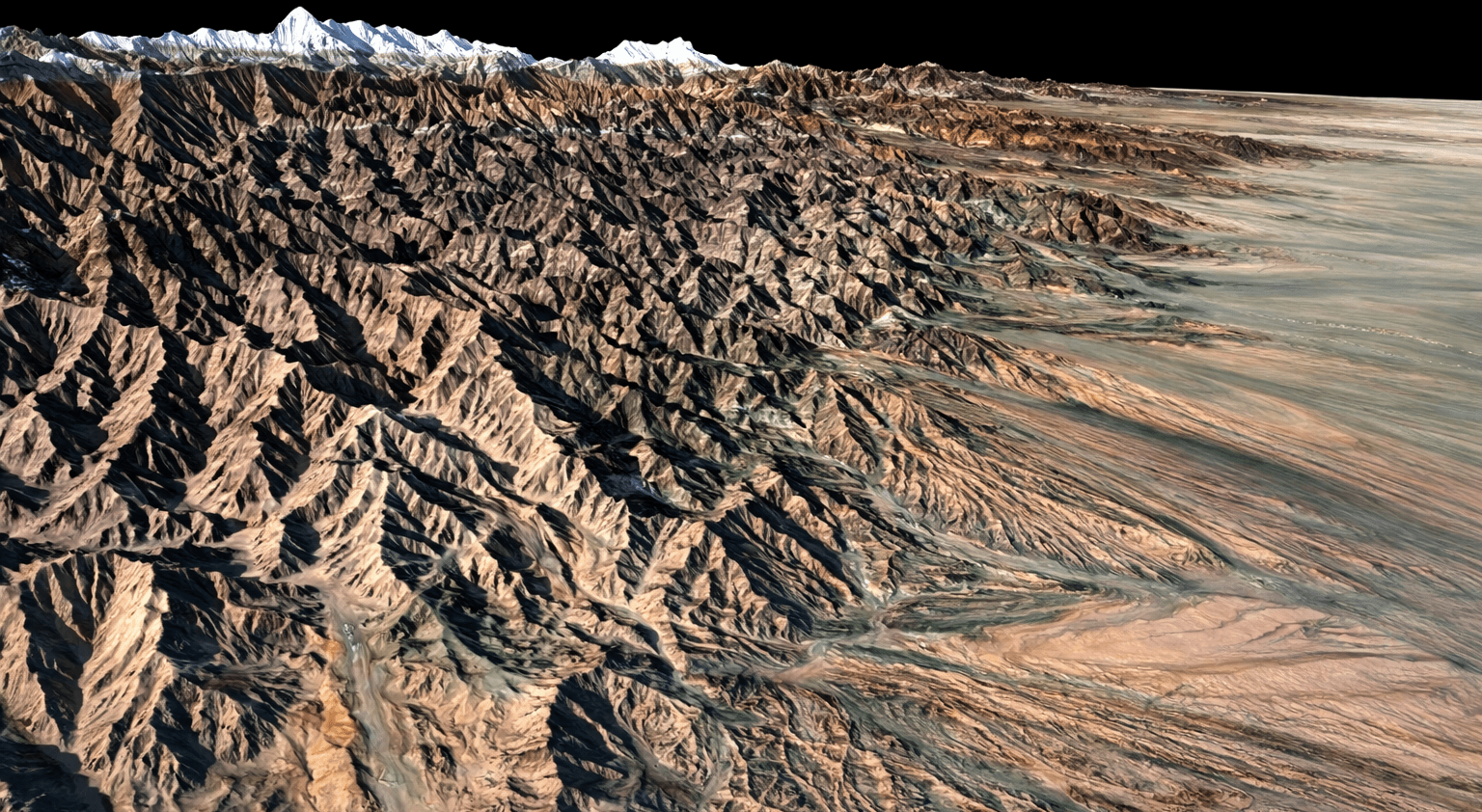
Geologists use high-resolution imagery and Digital Elevation Models (DEMs) to identify critical lineaments, such as faults, fractures, and shear zones.
Unlike ground-level surveys, satellite-based structural mapping provides a regional perspective that reveals the tectonic frameworks governing mineral concentration.
The XRTech Advantage
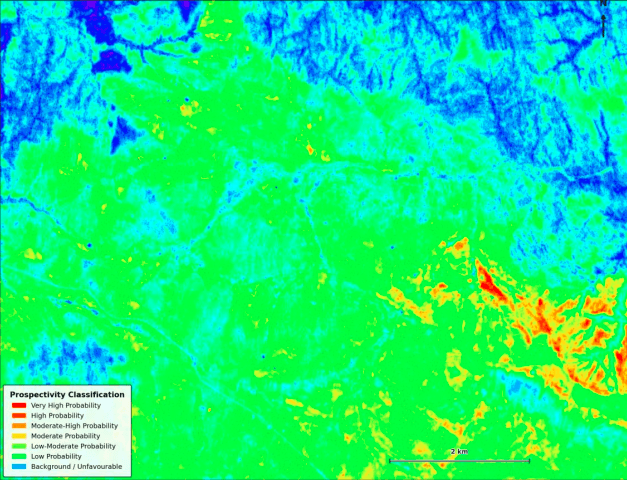
Our Khaza'in methodology uses proprietary Deep Learning Algorithms to analyze hyperspectral patterns and map mineralization probability with unprecedented accuracy.
2. Logistical Planning & Site Development
Once targets are identified, satellite data plays a key role in early exploration planning. Detailed terrain analysis helps teams design optimal access tracks and roads to remote drill sites. This logistical capacity significantly reduces the time and cost associated with establishing exploration operations in challenging environments.
Furthermore, 3D geological mapping using Digital Orthophoto Maps (DOM) and DEM datasets provides a multi-dimensional view of the landscape, allowing engineers to estimate overburden and evaluate site feasibility before breaking ground.
Terrain Analysis
- Identify optimal access routes for remote sites
- Calculate slope gradients for road construction
- Detect potential geohazards before development
3D Geological Mapping
- Digital Orthophoto Maps (DOM) for precise visualization
- DEM datasets for accurate volume calculations
- Overburden estimation for cost planning
3. Monitoring Active Mining Operations
As a project moves into extraction, satellite intelligence shifts toward operational efficiency and infrastructure safety.
Progress Tracking
Routine high-resolution imagery records land disturbance and pit development in real-time, providing a consistent audit trail for stakeholders.
Infrastructure Safety
XRTech utilizes InSAR (Interferometric Synthetic Aperture Radar) technology to monitor critical assets like tailings dams and pipelines. This technology detects millimeter-level deformation, allowing for early identification of structural risks.
Inventory Management
Remote sensing images can monitor stockpiles of bulk commodities, such as iron ore or crude oil, helping companies manage supply chains and futures trading.
Critical Safety Monitoring
InSAR technology is particularly crucial for monitoring tailings dams - structures that have caused catastrophic failures in recent years. Our millimeter-level deformation detection provides early warning systems that can prevent disasters.
Learn About InSAR Safety Monitoring →4. Mine Site Rehabilitation and Closure
The mining lifecycle does not end when extraction stops. Satellite imagery for mine site rehabilitation and closure ensures that companies meet environmental regulations and restore the land responsibly.
Environmental Impact Tracking
Satellites monitor deforestation, land degradation, and vegetation health around the site to ensure ecological restoration is on track.
- Vegetation regrowth monitoring
- Deforestation tracking
- Land degradation assessment
Water Quality Monitoring
Hyperspectral imaging tracks parameters such as pH, heavy metals, and turbidity in surrounding water bodies to detect contamination from legacy waste or tailings dams.
- pH level monitoring
- Heavy metal detection
- Turbidity analysis
Post-Closure Audits
Automated alerts and time-series analysis provide verifiable documentation of successful site restoration for regulatory compliance. Historical satellite data allows comparison of site conditions before, during, and after mining operations.
Compliance Benefit: Satellite documentation provides indisputable evidence for environmental regulators and stakeholders.
The XRTech Khaza'in Process
XRTech's Khaza'in methodology provides a modern, cost-efficient path to mineral targeting using proprietary Deep Learning Algorithms that transform exploration timelines.
Define AOI
Client specifies Area of Interest
Data Acquisition
130+ satellite constellation
AI Classification
Deep learning analysis
Ground Validation
Physical sample calibration
Actionable Reporting
Maps + Coordinates + Confidence
Transformative Results
By integrating this end-to-end process, XRTech Group slashes exploration timelines from years to days, giving landowners and partners a decisive competitive edge in uncovering the Earth's hidden wealth.
- 2–3 day turnaround for areas <100 km²
- Under 7 days for standard imagery delivery
- 24-hour emergency response available
Ground Facilities Efficiency
XRTech leverages a global network of ground stations that allow command uploads within 3 hours, ensuring unlimited global access to data.
Explore Our Satellite NetworkGlobal Success Stories
XRTech's Khaza'in intelligence platform has demonstrated world-class results across several high-value mineral provinces, drastically reducing traditional exploration timelines.
| Region | Case Study Highlight | Reported Timeline |
|---|---|---|
| Tanzania | Rapid identification of gold mineralization in the Lake Victoria Gold Belt, helping flag viable zones near artisanal workings | Delivered in <20 days |
| Chile | Mapped copper and alteration signatures in the Andean Copper Region, saving months of fieldwork and allowing partners to reprioritize drill schedules | Months of field time saved |
| Mauritania | Mapped 10 priority gold zones adjacent to one of Africa's largest mines (Tasiast Mine Region) with a probability of up to 21.69% | Rapid deployment |
| West Africa | Analyzed hundreds of square kilometers of remote terrain to generate a ranked list of gold exploration targets for a leading mining company | Rapid data delivery |
Deep Dive: Mauritania Tasiast Mine Region
Geological Context
The Tasiast region lies within the Reguibat Shield, characterized by Precambrian rocks that provide an ideal geological environment for hosting hydrothermal gold deposits.
- Remote Sensing Data Fusion of multispectral and interferometric data
- Identified 10 priority gold zones with Deep Learning algorithms
- Top target showed 21.69% gold probability
Business Value Delivered
- Accelerated Discovery: Slashed exploration time from years to days
- Cost Reduction: Minimized expense of traditional ground surveys
- Data-Driven Decisions: Quantitative evidence to de-risk investment
"Using satellite intelligence for mining in Mauritania is like having a digital surveyor that never sleeps; it monitors the vast, shifting sands of the Reguibat Shield to pinpoint hidden wealth while ensuring the structural safety of the mines that extract it."
Using satellite intelligence for mining is like having a time-traveling telescope; it allows you to look back through decades of historical archives while simultaneously providing real-time vision that detects hidden wealth far beyond what the naked eye can see.
Start Your Mining ProjectRapid Delivery & Technical Capabilities
Guaranteed Turnaround Standards
Delivery Timeframes
-
Small AOI Turnaround
Khaza'in guarantees 2–3 day turnaround for project areas smaller than 100 km²
-
General Imagery Delivery
Standard Earth Observation imagery typically delivered in under 7 days, with some cases achieved in 4 days
-
Urgent Response
For emergency situations, analysis-ready satellite imagery can be accessed within 24 hours of capture
Ground Station Network
XRTech leverages a global network of ground stations that allow command uploads within 3 hours, ensuring unlimited global access to data.
Technical Advantage
This rapid response capability is particularly valuable for:
- Emergency disaster response monitoring
- Time-sensitive exploration windows
- Rapid infrastructure safety assessments
Satellite Constellation Advantages
- 130+ Satellite Network: Largest non-U.S. constellation ensuring redundancy and coverage
- Multi-Sensor Capability: Optical, SAR, hyperspectral, and stereo imaging
- Global Coverage: No location restrictions or political limitations
- Historical Archive: Data dating back to 1999 for change detection
Sensor Specifications
SuperView Neo-1
0.3m resolution, daily revisit capability, panchromatic + 4-band multispectral
GF-5B Hyperspectral
30m resolution, 400–2500nm spectral range, 12-day revisit
GF-3 SAR
C-band radar, 1m resolution, all-weather day/night imaging
AI-Powered Analytics & Deep Learning in Mining
XRTech's proprietary Deep Learning Algorithms represent a revolutionary approach to mineral exploration and mining operations. These AI systems analyze complex patterns in satellite data that human analysts might miss.
How AI Classification Works
- Data Processing: Raw satellite imagery undergoes preprocessing including atmospheric correction and orthorectification
- Neural Network Analysis: Convolutional neural networks analyze hyperspectral patterns across hundreds of spectral bands
- Probability Mapping: Algorithms generate probability scores for mineralization based on learned patterns from thousands of known deposits
- Ground Truth Validation: AI results are validated against physical samples to ensure accuracy and build confidence
Business Impact of AI Analytics
Exploration Efficiency
AI analysis reduces exploration areas by up to 90%, focusing only on high-probability zones
Cost Reduction
Eliminates unnecessary drilling and ground surveys through precise targeting
Speed Acceleration
Processes thousands of square kilometers in days instead of months
Risk Mitigation
Provides data-backed evidence for investment decisions, reducing exploration risk
Case Study: 21.69% Gold Probability
In the Mauritania Tasiast region, our Deep Learning algorithms analyzed hundreds of square kilometers and identified a top target with a calculated gold probability of 21.69%.
This quantitative probability score provided landowners with unprecedented leverage in exploration rights negotiations and gave mining companies confidence in their investment decisions.
AI Accuracy Metrics
Environmental Monitoring & Regulatory Compliance
Modern mining operations face increasing pressure to demonstrate environmental responsibility and regulatory compliance. Satellite imagery provides verifiable, objective data for environmental monitoring throughout the mining lifecycle.
Water Quality Monitoring
Hyperspectral imaging tracks critical water parameters in real-time:
- pH level fluctuations
- Heavy metal concentrations
- Turbidity and sediment load
- Chemical contamination detection
Vegetation & Land Health
Continuous monitoring of ecosystem recovery:
- Vegetation regrowth tracking
- Deforestation assessment
- Land degradation analysis
- Rehabilitation progress verification
Compliance Documentation
Automated reporting for regulatory requirements:
- Automated alert systems
- Time-series analysis reports
- Verifiable restoration evidence
- Historical comparison data
The Compliance Advantage
For Mining Companies
- Risk Reduction: Proactive detection of environmental issues before regulatory penalties
- Cost Savings: Avoid fines and operational shutdowns through continuous monitoring
- ESG Reporting: Comprehensive data for environmental, social, and governance reporting
For Regulators & Communities
- Transparency: Independent verification of mining company claims
- Objective Data: Unbiased satellite evidence for enforcement decisions
- Community Trust: Publicly accessible monitoring data builds community confidence
Satellite monitoring provides the "digital paper trail" that mining companies need for regulatory compliance and that communities deserve for environmental protection.
Investment Analysis & ROI Considerations
Cost-Benefit Analysis: Traditional vs Satellite Approach
| Cost Factor | Traditional Exploration | XRTech Satellite Solution | Savings/Advantage |
|---|---|---|---|
| Initial Survey (500 km²) | $2.5M - $5M | $250K - $500K | 90% savings |
| Time to Results | 12-24 months | 30-60 days | 10x faster |
| Personnel Required | 45-60 field staff | 5-10 analysts | 80% reduction |
| Safety Insurance | High premium | Minimal premium | Risk eliminated |
| Data Quality | Point samples only | Complete area coverage | 100% coverage |
ROI Calculation Example
Additional benefits: Faster time-to-market, reduced risk, better data quality, and improved safety record.
Investment Payback Period
Cost savings realized immediately upon survey completion
Savings typically pay for satellite survey within first quarter
Strategic Value Beyond Cost Savings
Competitive Advantage
Faster discovery timelines give early movers advantage in securing mining rights and market positioning.
Risk Mitigation
Data-backed exploration decisions reduce geological risk and improve investment confidence.
Sustainability Credentials
Reduced environmental footprint and improved monitoring capabilities enhance ESG ratings.
Implementation & Integration Process
Implementing XRTech's satellite solutions into your mining operations is a streamlined process designed for minimal disruption and maximum value realization.
Integration Timeline
Week 1: Project Scoping
Define AOI, objectives, and success metrics with our technical team
Week 2: Data Acquisition
Satellite tasking and initial data collection from our constellation
Week 3-4: Analysis & Reporting
AI processing, validation, and comprehensive report generation
Week 5: Implementation
Integration with existing systems and team training
Technical Integration
Data Formats & Compatibility
We deliver data in industry-standard formats compatible with all major platforms:
Software Compatibility
Seamless integration with:
Ongoing Support & Monitoring
Dedicated Support
Assigned technical account manager for ongoing assistance
Regular Updates
Scheduled data refreshes based on your operational needs
Performance Analytics
Regular reporting on ROI and operational improvements
Our implementation process is designed to deliver value quickly while ensuring long-term integration success with your existing operations.
Schedule Implementation ConsultationReady to Transform Your Mining Operations?
Join leading mining companies who are leveraging XRTech's satellite intelligence across their entire lifecycle—from exploration to rehabilitation.