
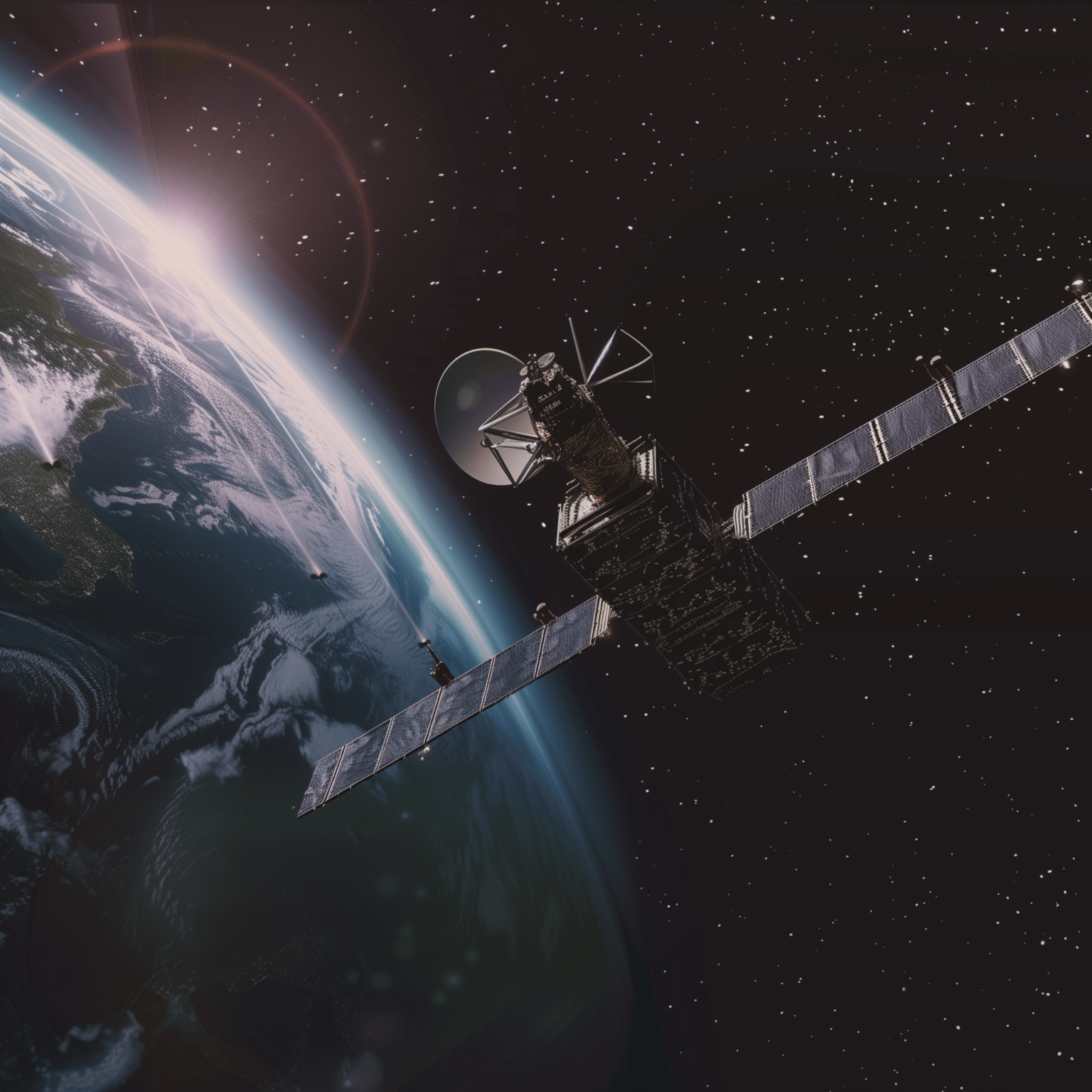
Stereo Satellite Imagery for 3D Mapping, DEM and DSM
Buy stereo and tri-stereo satellite imagery from 0.3m to 2.1m resolution. Each area is captured from two or three viewing angles, so we can build accurate DEMs, DSMs, DTMs, orthophotos and 3D city models anywhere on Earth. Archive stereo pairs ship in 4 to 7 days, and new tasking reaches remote and restricted regions.
GF-7 · Beijing-3A · Beijing-3B · SuperView-1 and 2 · SuperView Neo-1 · ZY-3
0.3m
Finest stereo resolution (Beijing-3B, SuperView Neo-1)
±3m
Standard vertical RMSE, about 1m with GF-7 and GCPs
4 to 7 days
Archive stereo delivery, DEMs in under 21 days
130+
Optical and radar satellites in our network
What Is Stereo Satellite Imagery?
Stereo satellite imagery is a pair of images of the same ground area captured by a satellite from two different viewing angles, usually seconds apart on the same orbit. The shift between the two views, called parallax, lets photogrammetry software measure height and turn flat 2D pixels into 3D elevation data.
A tri-stereo set adds a third, near-vertical (nadir) image. That extra view sees into urban canyons and steep valleys that an angled image misses, so the digital surface model has fewer gaps and sharper building edges.
Stereo imagery is also called stereoscopic satellite imagery, stereo pairs, 3D satellite imagery or satellite photogrammetry data. It is the most cost-effective way to map elevation over large or hard-to-reach areas without flying LiDAR or sending survey crews into the field.
Key terms you will see in this guide: in-track (along-track) stereo, cross-track stereo, base-to-height ratio (B/H), convergence angle, epipolar images and RPC camera models. Read our guide to stereoscopic imagery and DEM creation for more depth.
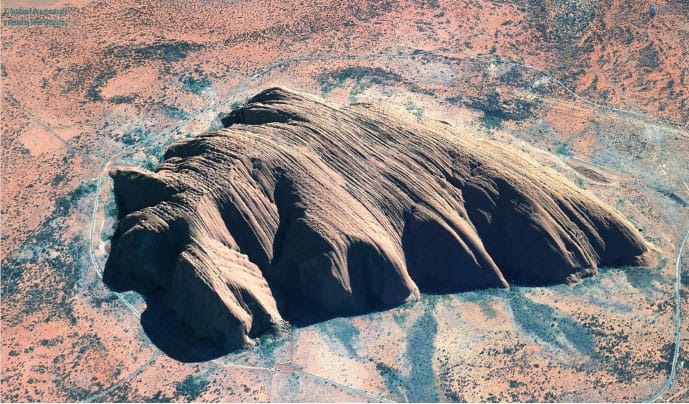
3D terrain rendered from a stereo-derived surface model
How Stereo Satellite Imaging Works
Stereo mapping gives a satellite binocular vision. Six steps turn two or three overlapping images into survey-grade 3D data.
01
Multi-angle capture
An agile satellite pitches forward and backward along its orbit, or uses fixed forward, nadir and backward cameras, to image the same site from two or three angles within about 45 to 90 seconds.
02
Base-to-height ratio
The distance between the two viewpoints divided by orbit height (B/H) sets depth sensitivity. We plan collections at a B/H of 0.6 or higher for geometry close to an aerial survey.
03
In-track vs cross-track
In-track stereo is collected on a single pass, so lighting and ground conditions match. Cross-track stereo pairs images from different orbits and fills areas where no in-track archive exists.
04
AI image matching
Automated dense matching finds the same point (conjugate or homonymous points) in each image, measures the parallax and computes X, Y and Z for millions of points.
05
3D surface generation
The point cloud is filtered and gridded into a DSM. Buildings and trees are then removed to produce the DEM and DTM, and orthophotos are rectified on the new surface.
06
Accuracy validation
RPC bundle adjustment, optional ground control points and checkpoint tests produce an accuracy report with vertical RMSE and horizontal CE90 for every delivery.
Mono vs Stereo vs Tri-Stereo Satellite Imagery
Which acquisition mode do you need? Use mono for 2D mapping, stereo for most elevation work, and tri-stereo for dense cities and steep terrain.
Mode
Images per area
Best for
3D quality
Price vs mono
Mono
1 image, near vertical
2D basemaps, orthomosaics, change detection
None, needs an external DEM
1x
Stereo (in-track)
2 images, forward and backward
DEM, DSM, contours, volumes, most engineering work
Good, small gaps beside tall buildings
2x
Tri-stereo
3 images, forward, nadir and backward
Dense cities, 3D city models, steep mountains, open-pit mines
Best, fewest occlusions and voids
3x
Cross-track stereo
2 images from different passes
Areas with no in-track archive
Fair to good, depends on the date gap
2x
Stereo Satellite Constellations We Task and Supply
Through our partnership with China Siwei and other operators, we collect stereo and tri-stereo imagery from sub-meter mapping satellites, with 360 degree agile pointing for complex terrain and dense cities.
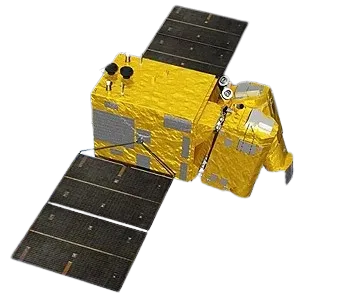
GF-7 (Gaofen-7)
0.65m PAN · 2.6m MS · 20km swath · +26° and -5° cameras
China's sub-meter stereo mapping satellite, built for 1:10,000 scale topographic maps. Its two-beam laser altimeter tightens height accuracy, which makes GF-7 the first choice for engineering DEMs.
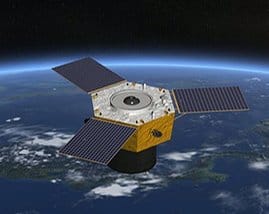
Beijing-3A
0.5m PAN · 2m MS · 23.5km swath · mono, stereo, tri-stereo
Agile very high resolution satellite that collects stereo and tri-stereo in a single pass, ideal for city DSMs and mid-size engineering sites. Beijing-3A imagery

Beijing-3B (BJ3N)
0.3m PAN · 1.2m MS · AI-enabled agile attitude control
30cm stereo pairs for building heights, 3D white models and detailed urban digital twins, collected on demand with fast attitude changes. Beijing-3B imagery

SuperView-1 and SuperView-2
0.5m and 0.42m PAN · long-strip, multi-strip and stereo modes
High-agility VHR fleets for large-area elevation mapping, corridors and multi-strip stereo blocks. SuperView-2 adds 8-band multispectral for land cover work.
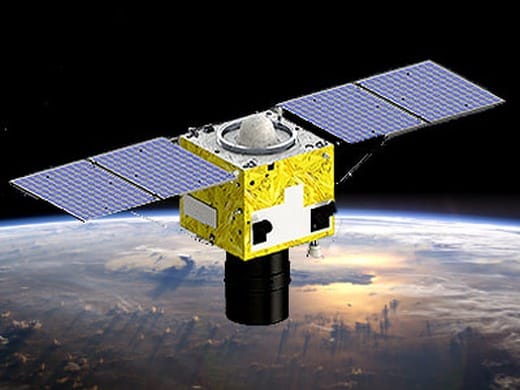
SuperView Neo-1 (01 to 04)
0.25 to 0.3m PAN · four-satellite fleet · stereo collection
The finest stereo detail in our network, used for cadastral mapping, building extraction and height of small objects such as walls, tanks and towers.
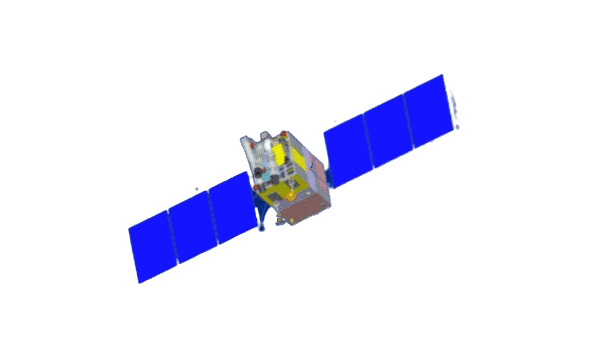
ZY-3 constellation (01, 02, 03)
2.1m nadir · 2.7 to 3.5m forward and backward · three-line array
A dedicated civilian stereo mapping constellation for seamless 1:50,000 scale DEMs over regions and whole countries at the lowest cost per km².
Stereo satellite specifications at a glance
Satellite
PAN / MS resolution
Stereo capability
Best for
SuperView Neo-1
0.25 to 0.3m / 1.2m
Agile in-track stereo
Urban 3D, cadastral, building heights
Beijing-3B (BJ3N)
0.3m / 1.2m
Agile stereo, AI attitude control
Digital twins, 3D white models
SuperView-2 (GFDM)
0.42m / 1.68m, 8 bands
Stereo and multi-strip
Large-area DSM, land use
Beijing-3A
0.5m / 2m
Mono, stereo, tri-stereo
City DSM, engineering sites
GF-7
0.65m / 2.6m
Dual-line stereo plus laser altimeter
1:10,000 topographic DEM
ZY-3 (01 to 03)
2.1m nadir, 2.7 to 3.5m angled / 5.8m
Three-line array tri-stereo
1:50,000 regional and national DEM
LT-1 (SAR)
L-band radar
Interferometric (InSAR) pairs
All-weather DEM and ground deformation where clouds block optical. SAR data
Stereo Imagery Products: DEM, DSM, DTM, Orthophoto and 3D Models
Buy raw stereo pairs with RPC files for your own photogrammetry, or let our team process them into ready-to-use elevation and 3D products.
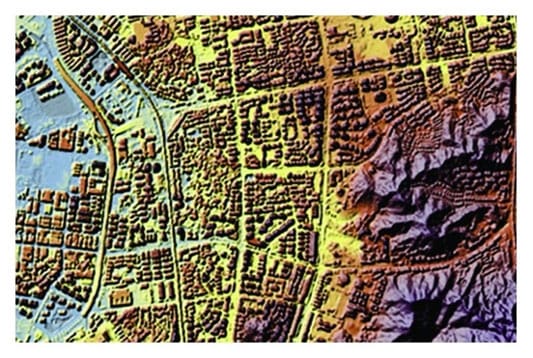
Digital Surface Model (DSM)
Top-surface heights including roofs, bridges and tree canopy. Used for line-of-sight, telecom planning, solar studies and building height analysis. DSM services
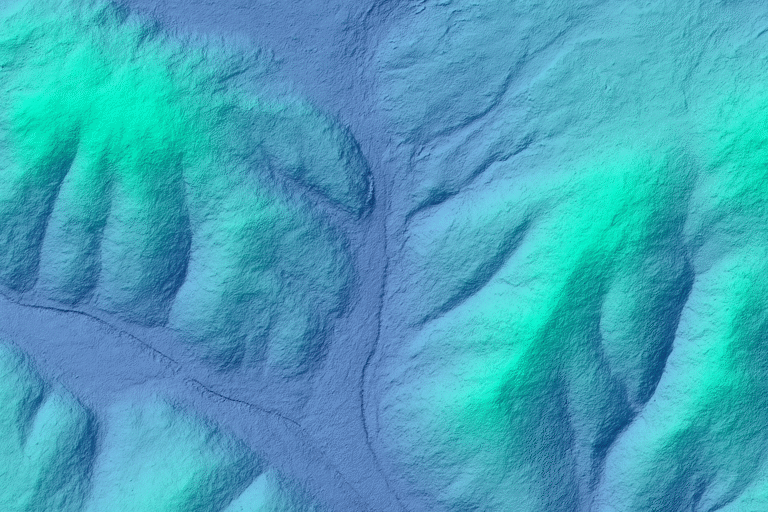
Digital Elevation Model (DEM)
Bare-earth heights with buildings and vegetation removed, at 2 to 10m grid spacing and around ±3m vertical RMSE. The base layer for hydrology, slope and flood models. DEM services
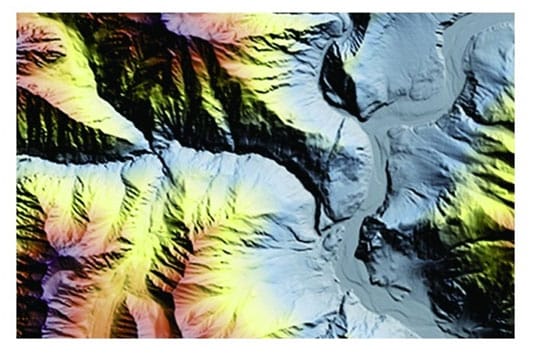
Digital Terrain Model (DTM)
A bare-earth model enhanced with breaklines, ridges and drainage lines for civil design, cartography and earthworks planning. DTM services

Digital Orthophoto Map (DOM)
Imagery orthorectified on the stereo-derived surface so every pixel sits in its true position. Delivered at 50cm with 8m CE90 or better, tighter with ground control points.
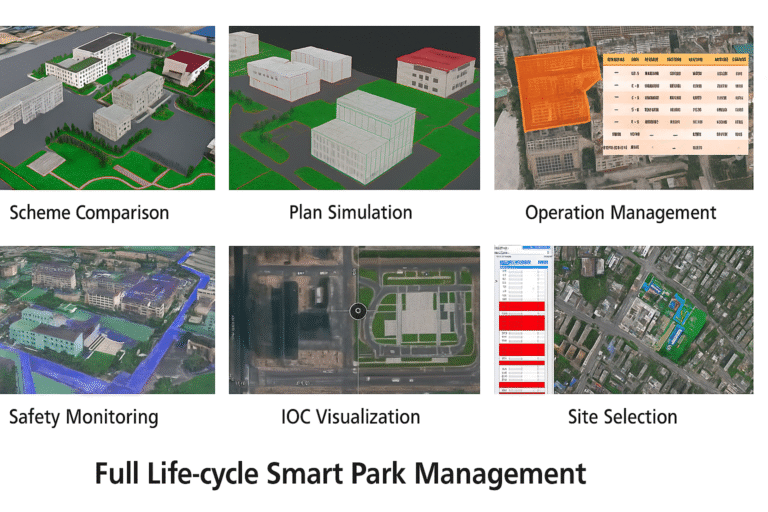
3D Building White Models
Deep-learning footprint extraction and contour pairing across the left and right images calculate roof heights and build 3D city models for smart parks and digital twins. 3D city models
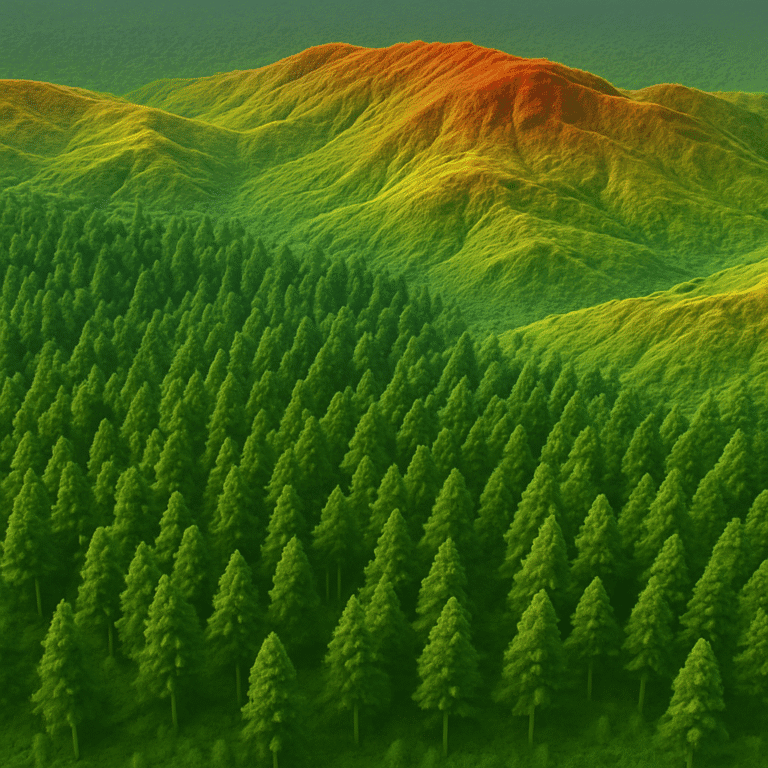
Point Clouds, Contours and Volumes
Dense 3D point clouds (LAS/LAZ), contour lines at your chosen interval, and volume reports for stockpiles, pits and cut-and-fill balances.
Stereo Satellite Imagery Specifications and Accuracy
Engineering-grade data with a documented accuracy report. Every stereo product ships with metadata, RPCs and projection files, and works with or without ground control points.
Specification
Value
Stereo resolution
0.25m to 0.65m panchromatic (VHR), 2.1m to 3.5m for ZY-3 regional mapping
Vertical accuracy
±3m RMSE standard for DEM and DSM, about 1m with GF-7 and ground control
Horizontal accuracy
Sub-meter to 8m CE90 depending on sensor and control points
Grid spacing
0.5m to 10m DSM and DEM posting
Stereo geometry
Base-to-height ratio of 0.6 or higher, forward and backward views, optional nadir view for tri-stereo
Cloud cover
10% or less standard, 5% or less on request for new tasking
Sun angle
About 10:30 local time descending node for consistent shadows
Spectral bands
Panchromatic, RGB and near-infrared, plus red edge, coastal and yellow on 8-band sensors
Processing levels
Level 1A/1B stereo pairs with RPCs, epipolar images, or orthorectified Level 2A
Coordinate systems
WGS84, UTM or a custom local datum, with orthometric (EGM2008) or ellipsoidal heights
Delivery formats
GeoTIFF, IMG, SHP, DWG/DXF, LAS/LAZ, OBJ/3DS and KML, ready for ArcGIS, QGIS, AutoCAD Civil 3D and Global Mapper
Ground control
Works without GCPs, and your GCPs or RTK points tighten absolute accuracy
Delivery time
Archive stereo in 4 to 7 days, custom DEM and DSM in under 21 days, emergency within 24 hours
Stereo Satellite Imagery Applications by Industry
Wherever a project depends on height, slope or volume, stereo imagery replaces weeks of field survey with accurate 3D data covering the whole area.
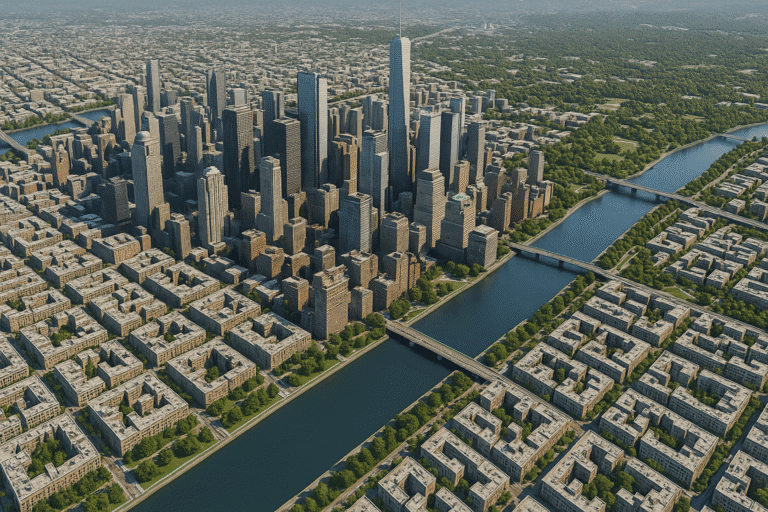
Smart cities and digital twins
Building heights, 3D white models, zoning and skyline checks, and scenario simulation for urban digital twin platforms. Urban planning imagery
Flood modeling and hydrology
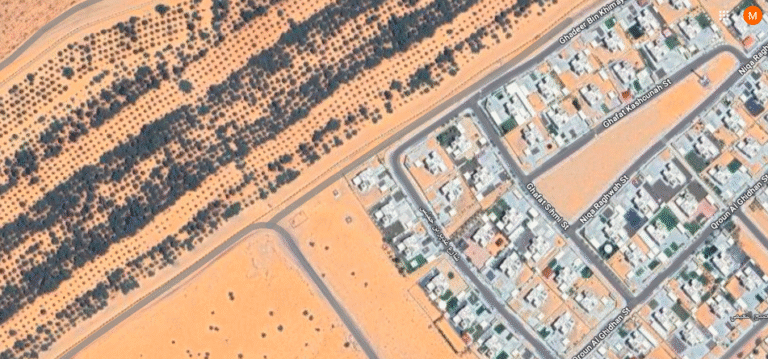
Flood-ready DEMs simulate surface runoff, storm drainage capacity and inundation depth for climate resilience planning, as in our Abu Dhabi stereo mapping work.
Mining and quarries
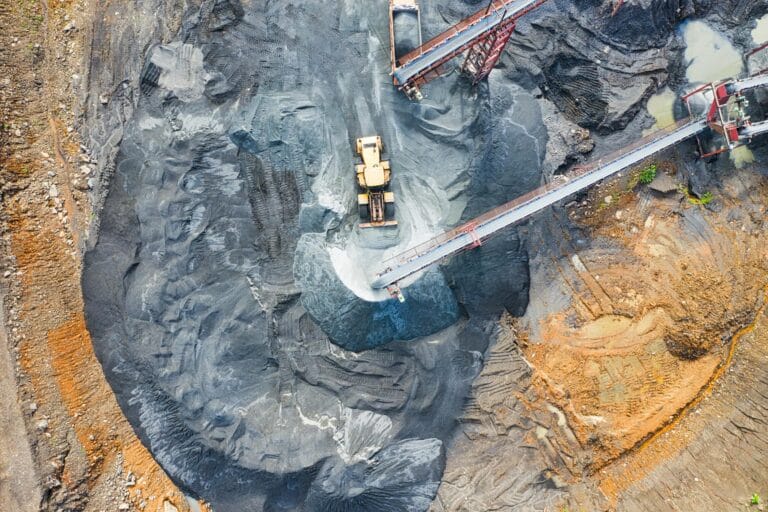
3D pit surfaces, overburden and stockpile volumes, pit slope stability and tailings dam monitoring. Mining imagery

Civil infrastructure and transport
Route selection for roads, railways, pipelines and power lines using slope, cut-and-fill and terrain profiles, plus construction progress monitoring.

Oil and gas
Pipeline corridor terrain, well pad and facility grading, 3D geological surface mapping and subsidence context with InSAR. Oil and gas imagery

Environment and forestry
Canopy height, biomass, coastal erosion, landslide and watershed analysis from repeat stereo surfaces. Environmental monitoring
Agriculture and land management
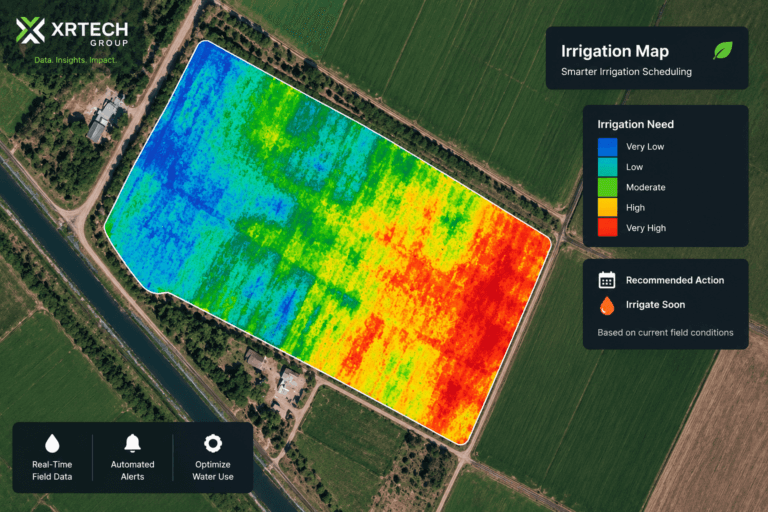
Slope, drainage and elevation for irrigation design, terracing, soil conservation and land levelling. Precision agriculture
Telecom and energy
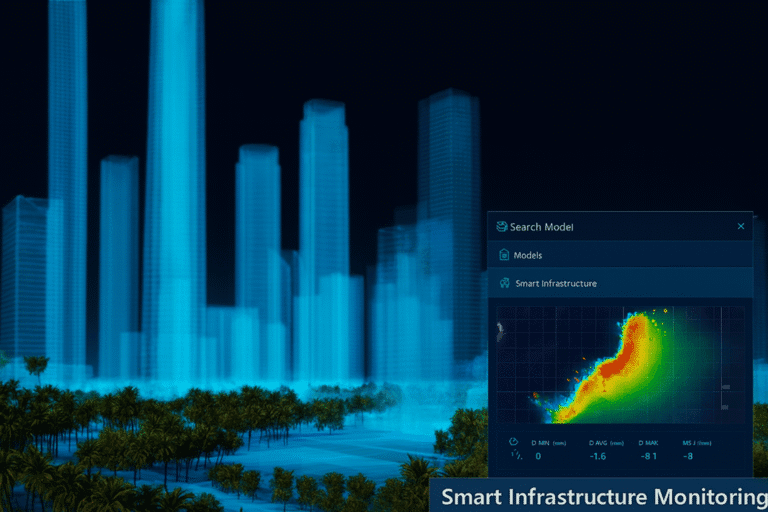
Line-of-sight and RF propagation modeling for 5G and microwave links, and wind or solar site layout using DSM heights and shadows.
Disaster response
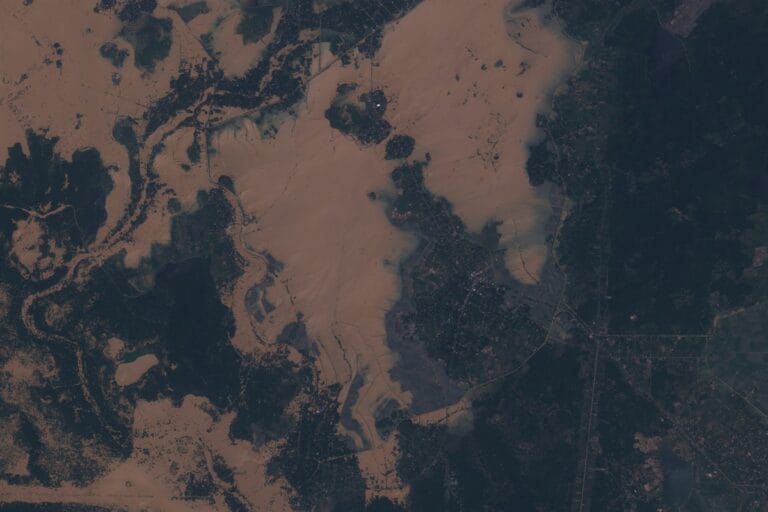
Rapid post-event surfaces for landslide volume, debris and collapsed building assessment, with priority tasking and delivery inside 24 hours.
Case Study: Flood-Ready Stereo Imagery for Abu Dhabi
Challenge. Planners needed current terrain and building heights to model storm runoff in fast-growing districts, where older elevation data missed new roads, plots and developments.
What we delivered. High-resolution stereo imagery processed into a DSM, a bare-earth DEM and an orthorectified urban basemap, supplied in GIS-ready formats with an accuracy report.
How it was used. The DEM fed surface runoff and drainage capacity simulations to find low points, test storm drain capacity and prioritise climate resilience works across the study area.
Plan a flood model for your city →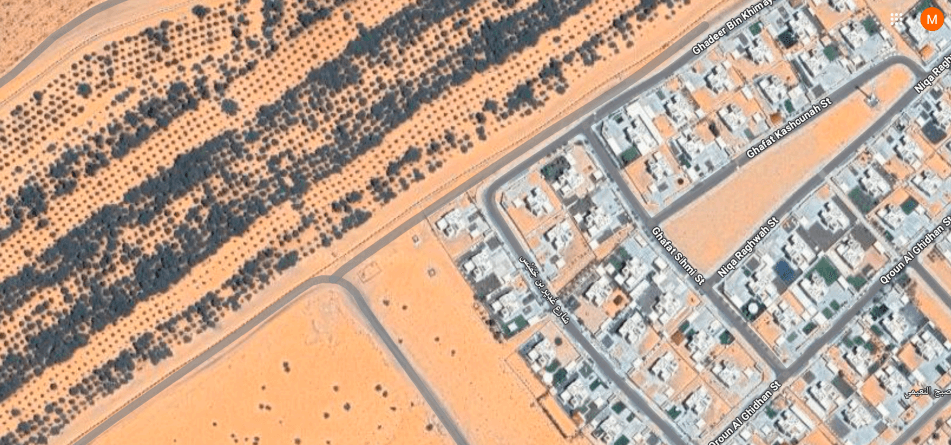
Abu Dhabi: stereo-derived basemap for drainage and runoff modeling
Stereo Satellite Imagery vs LiDAR vs Drone Photogrammetry
All three produce elevation data. The right choice depends on area size, required accuracy, access and budget. Many projects combine them: satellite stereo for the whole region, LiDAR or drones for small critical sites.
Criteria
Satellite stereo
Airborne LiDAR
Drone photogrammetry
Area per project
25 km² up to whole countries
Tens to hundreds of km², flight limited
Small sites, usually a few km²
Vertical accuracy
About 1 to 3m RMSE
About 5 to 15cm
About 3 to 10cm with GCPs
Cost per km²
Lowest for large areas
Highest, plus mobilisation
Low for small sites, rises fast with area
Access and permits
No flight permits or site access needed
Aviation permits and aircraft
Drone permits and a crew on site
Lead time
Days for archive, weeks for tasking
Weeks to months
Days, weather dependent
Under vegetation
Surface only, DEM interpolated under canopy
Penetrates canopy to bare ground
Surface only
Historical data
Archive stereo for past change analysis
Rarely available
Not available
Best for
Regional mapping, feasibility, remote or restricted areas
Detailed engineering under forest
Construction sites and stockpiles
Stereo Satellite Imagery Pricing
Stereo pricing is simple. A stereo pair costs 2x the mono rate and a tri-stereo set 3x, because you receive two or three full images of the same area. Prices below are per km² for archive imagery.
Resolution class
Mono archive
Stereo (2x)
Tri-stereo (3x)
High resolution (up to 1m)
from $5/km²
from $10/km²
from $15/km²
Very high resolution (50cm)
from $13 to $14/km²
from $26 to $28/km²
from $39 to $42/km²
Super high resolution (30cm)
from $20/km²
from $40/km²
from $60/km²
New tasking
Quoted per project
2x the mono tasking rate
3x the mono tasking rate
Minimum order
Archive stereo from 25 km², new stereo tasking from 100 km². Smaller sites can be quoted on request.
Elevation and 3D products
DEM, DSM, DTM, orthophoto and 3D models are priced by area, grid spacing and target accuracy. See full satellite imagery pricing.
Project-wide licensing
One simple licence covers your team, contractors and government partners on the same project.
How to Buy Stereo Satellite Imagery
Four steps from area of interest to 3D data in your GIS.
1
Send your area of interest as KML, KMZ, SHP or coordinates, with the product and accuracy you need.
2
We search archive stereo coverage across our constellation and recommend archive or new tasking.
3
Approve the quote. We deliver stereo pairs with RPCs, or process them into a DEM, DSM, DTM, orthophoto or 3D model.
4
QA and delivery. Files, metadata and an accuracy report arrive by secure cloud link.
Archive stereo imagery
Stereo pairs already collected over your site. Delivered in 4 to 7 days at the lowest cost, ideal when recent terrain is good enough.
New stereo tasking
Fresh stereo or tri-stereo captured to your dates, cloud limits and geometry. Timing depends on weather, latitude and satellite availability.
Why Choose XRTech Group for Stereo Satellite Imagery
A non-U.S. Earth observation partner with direct access to sub-meter stereo mapping satellites and an in-house photogrammetry team.
01
Rapid stereo delivery
Archive stereo imagery delivered in 4 to 7 days, with custom DEM, DSM and DTM products in under 21 days.
02
Emergency response
Priority stereo acquisition and processing with delivery within 24 hours for disaster assessment.
03
No export control delays
As a non-U.S. provider, we avoid U.S. export control restrictions, giving faster access to global stereo imagery.
04
Global coverage
130+ satellites cover most regions, including remote, polar and politically sensitive areas where other providers face limits.
05
Engineering-ready outputs
GeoTIFF, SHP, DWG, LAS and OBJ deliveries with accuracy reports, compatible with your GCPs and CAD workflows.
06
Flexible licensing
Simple project-wide licences for engineering firms, government agencies and collaborative teams.
Stereo Satellite Imagery FAQ
Short answers to the questions buyers ask most about stereo imagery, accuracy, pricing and delivery.
What is stereo satellite imagery?
Stereo satellite imagery is two images of the same area captured from different angles, usually seconds apart on one orbit. The parallax between them is used to measure height, so the pair can be turned into a DEM, DSM, contours or a 3D model.
What is the difference between stereo and tri-stereo imagery?
Stereo uses two views, forward and backward. Tri-stereo adds a third near-vertical view, which fills gaps behind tall buildings and in steep valleys. Tri-stereo gives cleaner 3D city models and costs about 3x mono, while stereo costs about 2x.
How accurate is a DEM made from stereo satellite imagery?
Our standard stereo DEMs and DSMs reach about ±3m vertical RMSE at 2 to 10m grid spacing. With GF-7 and ground control points, vertical accuracy of about 1m is achievable. Horizontal accuracy ranges from sub-meter to 8m CE90.
How much does stereo satellite imagery cost?
Stereo imagery costs 2x the mono rate and tri-stereo 3x. Archive stereo starts from about $10/km² for 1m-class imagery, $26 to $28/km² at 50cm and $40/km² at 30cm. Processing into a DEM or 3D model is quoted by area and accuracy.
Which satellites provide stereo imagery?
We supply stereo from GF-7, Beijing-3A, Beijing-3B, SuperView-1, SuperView-2, SuperView Neo-1 and the ZY-3 constellation, plus LT-1 radar for InSAR elevation where clouds block optical sensors.
What is the difference between a DEM, DSM and DTM?
A DSM shows the top surface, including buildings and trees. A DEM shows bare earth with those objects removed. A DTM is a bare-earth model enhanced with breaklines and terrain features for engineering design and cartography.
Should I buy archive stereo imagery or new tasking?
Choose archive if existing stereo pairs over your site are recent enough, because it is cheaper and ships in 4 to 7 days. Choose new tasking when you need current conditions, specific dates, tri-stereo geometry or tight cloud limits.
Is satellite stereo imagery better than LiDAR or drones?
Satellite stereo is best for large, remote or restricted areas, needs no permits and costs the least per km². LiDAR is more accurate under forest, and drones suit small sites. Many projects use satellite stereo for the region and LiDAR or drones for critical spots.
What file formats are stereo products delivered in?
Stereo pairs come as GeoTIFF with RPC files. Elevation and 3D products are delivered as GeoTIFF, IMG, SHP, DWG/DXF, LAS/LAZ, OBJ/3DS or KML, in WGS84, UTM or a local coordinate system.
How long does stereo imagery delivery take?
Archive stereo imagery is delivered in 4 to 7 days. Custom DEM, DSM and DTM products take under 21 days, and emergency orders can be delivered within 24 hours. New tasking time depends on weather and satellite availability.
Ready to Elevate Your Project with 3D Intelligence?
Send your area of interest and we will check stereo archive coverage, recommend the right satellite and acquisition mode, and quote imagery and processing.
Request sample data
See stereo imagery and a DSM sample before you buy.
Technical consultation
Talk to our geospatial engineers about accuracy and workflow.
Detailed quote
Get a clear price for imagery, processing and licensing.
New to stereo data? Read Understanding Stereoscopic Satellite Imagery and DEM Creation.