Quick answer: The highest resolution satellite imagery you can buy today is 25 cm native optical imagery, from the SuperView Neo-1 03 and 04 satellites and Korea's SpaceEye-T. Next come the 30 cm class satellites: WorldView Legion, WorldView-3, Pléiades Neo, SuperView Neo-1 and Beijing-3B. Processed HD products reach 15 cm, radar (SAR) satellites reach 16 cm, and the sharpest commercial hyperspectral satellites reach about 5 m. The highest resolution satellite imagery that is free is 10 m from Sentinel-2, or 2 m panchromatic from CBERS-4A. XRTech Group supplies 25 cm, 30 cm and HD 15 cm imagery, plus SAR and hyperspectral data, from one 130+ satellite constellation.
"Highest resolution" means different things for different sensors, so the answer depends on whether you need an optical photo, a radar image, a hyperspectral cube or a free download. In this guide, the geospatial team at XRTech Group, a satellite imagery and geospatial intelligence provider, ranks each category, explains what each resolution can actually show, and answers the questions people ask most, from Google Earth's sources to whether a satellite can read a licence plate.
Category
Highest resolution available
Satellites
Commercial optical (native)
25 cm
SuperView Neo-1 03/04, SpaceEye-T
Processed optical (HD)
15 cm
HD products made from 25 to 30 cm captures
Radar (SAR)
16 cm
Umbra, ICEYE Gen4 spotlight modes
Hyperspectral
About 5 m
Pixxel Firefly, Wyvern Dragonette (5.3 m)
Free satellite imagery
2 m pan, 8 m multispectral; 10 m with global 5-day revisit
CBERS-4A; Sentinel-2
Next generation (planned)
20 cm class
Vantor Vantage, Pléiades Neo Next
What Is the Highest Resolution Satellite? Top Satellites Ranked
The table ranks the highest resolution satellites in commercial service by native panchromatic ground sample distance (GSD), the pixel size the camera captures before any enhancement. Two satellites lead at 25 cm, and five more sit in the 30 cm class.
Satellite
Operator and country
Native resolution
Status and access
SuperView Neo-1 03 and 04
China
25 cm pan, 1 m multispectral
Operational; available through XRTech Group
SpaceEye-T
Satrec Initiative, South Korea
25 cm pan
Operational
WorldView Legion (6 satellites)
Vantor (formerly Maxar), USA
30 cm class
Operational; up to 15 revisits a day over some areas
WorldView-3
Vantor, USA
31 cm pan, 1.24 m multispectral, SWIR bands
Operational
Pléiades Neo 3 and 4
Airbus, France
30 cm pan, 1.2 m multispectral
Operational (two satellites)
SuperView Neo-1 01 and 02
China
30 cm pan, 1.2 m multispectral
Operational; available through XRTech Group
Beijing-3B (BJ3N)
China
30 cm pan, 4-band multispectral
Operational, with onboard AI processing; through XRTech Group
SuperView-2 (GFDM)
China
42 cm pan, 8 multispectral bands
Operational; through XRTech Group
SuperView Neo-3
China
50 cm pan, 2 m 8-band, 130 km swath
Operational; through XRTech Group
Resolution is only one part of the answer. WorldView Legion leads on revisit, WorldView-3 adds shortwave infrared bands, and SuperView Neo-3 trades some detail for a very wide swath. See the full list of satellites in the XRTech constellation.

XRTech Group sample: HD 15 cm satellite image of Abu Dhabi, processed from SuperView Neo-1 imagery. Vehicles, lane markings and rooftop equipment are clearly visible.
Highest Resolution Satellite Imagery Explained: What Resolution Means
To compare the highest resolution satellite imagery, start with spatial resolution, or ground sample distance (GSD): the real-world size of one pixel. At 30 cm GSD, each pixel covers a 30 by 30 cm square on the ground. The smaller the number, the higher the satellite image resolution and the more you can see. Most very high resolution satellites capture a sharp panchromatic (black and white) band plus coarser colour bands, which are merged (pansharpened) into a colour image at the panchromatic resolution.
Resolution
What you can see
Typical sources
15 cm (HD)
Lane markings, vehicle type, small equipment, roof vents
HD processing of 25 to 30 cm captures; aerial surveys
25 cm
Manhole covers, parking bay lines, roof tiles, shrubs
SuperView Neo-1 03/04, SpaceEye-T
30 cm
Individual cars, road markings, fences; a person as one or two pixels
WorldView Legion, Pléiades Neo, SuperView Neo-1, Beijing-3B
50 cm
Cars as shapes, building outlines, road widths
SuperView-1, SuperView Neo-3, Beijing-3A
80 cm to 1 m
Buildings, roads, large vehicles as blobs
GF-2 (80 cm), TripleSat (80 cm)
3 to 5 m
Field boundaries, large structures, tree crowns in groups
PlanetScope, Wyvern, Pixxel
10 to 30 m
Land cover, crop patterns, regional change
Sentinel-2, Landsat 8 and 9
Spatial resolution is not the only kind. Spectral resolution is how many wavelengths a sensor records, temporal resolution is how often it revisits, and radiometric resolution is how finely it records brightness. A 10 m image with 13 bands can answer crop health questions that a 30 cm colour image cannot.
Highest Resolution Satellite Imagery Categories: Ultra High to Low
The satellite industry groups imagery into resolution tiers. Knowing the tier helps you choose the highest satellite image resolution you actually need, without paying for detail you will not use.
Tier
Resolution
Satellites and typical uses
Ultra high resolution
15 cm and finer
HD 15 cm processed imagery; asset inspection, construction detail, near-aerial mapping
Very high resolution
16 to 49 cm
SuperView Neo-1 03/04 (25 cm), WorldView Legion, Pléiades Neo, Beijing-3B (30 cm), SuperView-2 (42 cm); vehicles, infrastructure, compliance
High resolution
50 to 99 cm
SuperView-1, SuperView Neo-3, Beijing-3A (50 cm), GF-7 (65 cm), GF-2 and TripleSat (80 cm); mapping, planning, utilities
Medium resolution
1 to 7.99 m
GF-1 and GF-6 (2 m), CBERS-4A (2 m pan), PlanetScope (3 m), Wyvern and Pixxel hyperspectral (5 m); agriculture, forestry, regional monitoring
Low resolution
8 m and coarser
Sentinel-2 (10 m), Landsat 8 and 9 (15 to 30 m), GF-5B (30 m); climate, land cover, large-area change
Why Finding the Highest Resolution Satellite Imagery for Your Project Matters
The resolution you choose shapes every decision built on the image. Imagery that is too coarse hides the features you need. Imagery that is finer than necessary costs more, covers less ground per scene and takes longer to process. The right high resolution satellite image gives you:
- Accurate decisions: 25 to 30 cm imagery shows vehicles, equipment and small structures, so analysts and site managers can verify conditions without a site visit.
- Compliance and audit trails: time-stamped very high resolution imagery documents land use, restoration work and encroachment for regulators, lenders and insurers.
- Safety: remote inspection of pipelines, mines, dams and disaster zones keeps people out of hazardous areas.
- Faster response: archive imagery can be delivered within 48 hours, and SAR captures images through cloud and at night.
- Cost control: matching the tier to the task, such as 30 cm for a construction site and free 10 m Sentinel-2 for a watershed, avoids overspending.
Is 15 cm the Highest Satellite Image Resolution? HD Imagery Explained
No. The highest native satellite image resolution is 25 cm; no commercial satellite captures 15 cm directly. 15 cm "HD" imagery is produced by processing 25 to 30 cm native captures with super-resolution techniques that sharpen edges and reduce noise, then resampling to a 15 cm grid. The result is easier to interpret visually: vehicles, markings and small objects look crisper and closer to aerial photography.
HD imagery is ideal for visual inspection, mapping and presentations. For measurement-grade work, check the native resolution of the source capture, because processing improves clarity but cannot record detail the sensor never collected. XRTech Group offers HD 15 cm output from SuperView Neo-1 imagery, as in the Abu Dhabi sample above.
Highest Resolution SAR Satellite Imagery
The highest resolution SAR satellite imagery is 16 cm, from the spotlight modes of Umbra and ICEYE Gen4, with Capella at 25 cm. Synthetic aperture radar (SAR) satellites send their own microwave signal, so they image through cloud, smoke and darkness. Their headline resolution refers to the finest spotlight mode, and range and azimuth resolution can differ, so a "16 cm" SAR image is not directly comparable with a 16 cm optical photo.
Satellite
Operator
Finest resolution
Band and notes
Umbra
USA
16 cm (spotlight)
X-band; 25 cm and coarser standard products
ICEYE Gen4
Finland
Up to 16 cm
X-band; large small-satellite constellation
Capella
USA
25 cm azimuth
X-band spotlight, 5 by 5 km scenes
GF-3
China, through XRTech Group
1 m spotlight
C-band, 12 imaging modes, quad polarisation
LT-1 A and B
China, through XRTech Group
3 m
L-band InSAR, 1 to 2 mm ground deformation accuracy
Sentinel-1
ESA, free
5 by 20 m (IW mode)
C-band, global open data
The sharpest radar image is not always the right one. X-band spotlight imagery shows ships, vehicles and structures in fine detail, C-band is the workhorse for floods and oil spills, and L-band penetrates vegetation and measures millimetre-scale subsidence. Read more about SAR satellite imagery and data.
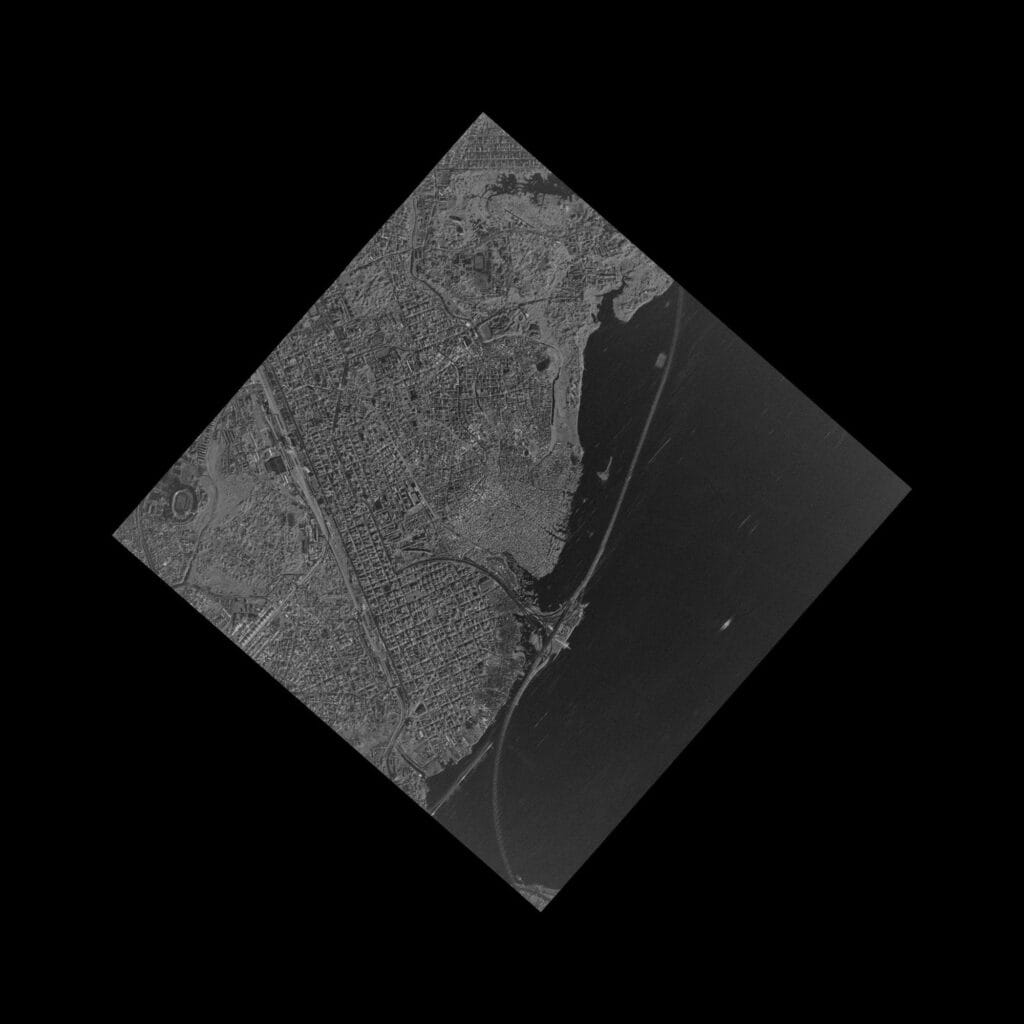
XRTech Group sample: X-band SAR satellite image of infrastructure in Nigeria. Radar records structure and surface roughness, day or night, through cloud.
Highest Resolution Hyperspectral Satellite Imagery
The highest resolution hyperspectral satellite imagery is about 5 m, from Pixxel Firefly (5 m) and Wyvern Dragonette (5.3 m). Hyperspectral satellites record hundreds of narrow wavelength bands, which lets them identify minerals, crop stress, water quality and materials by their spectral fingerprint. Their spatial resolution is much coarser than optical imagery: the long-standing standard was 30 m.
Satellite
Resolution
Bands and range
Access
Pixxel Firefly
5 m
150+ VNIR bands, 40 km swath
Commercial
Wyvern Dragonette
5.3 m
23 to 31 VNIR bands, 445 to 870 nm
Commercial; through XRTech Group
Orbital Sidekick GHOSt
About 8 m
VNIR and SWIR, 400 to 2,500 nm
Commercial
GF-5B (AHSI)
30 m
330 channels, 400 to 2,500 nm
Through XRTech Group
ZY-1 02D
30 m (2.5 m pan)
166 channels (76 VNIR, 90 SWIR)
Through XRTech Group
EnMAP and PRISMA
30 m
About 240 bands, VNIR and SWIR
Free for approved research
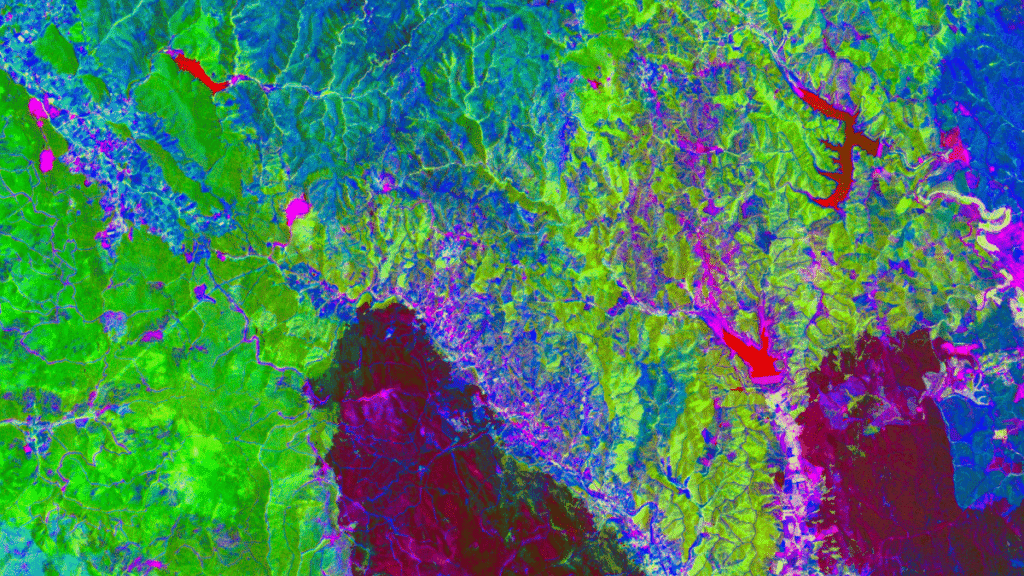
XRTech Group sample: hyperspectral mineral mapping across Australia, showing mineral signatures detected from orbit. XRTech's Khaza'in hyperspectral service uses GF-5B, ZY-1 02D and Wyvern data for mineral exploration.
Highest Resolution Satellite Imagery for Free: Best Free Sources
The highest resolution free satellite imagery with routine global coverage is 10 m from Sentinel-2. The sharpest free satellite optical data is 2 m panchromatic and 8 m multispectral from CBERS-4A, released free through Brazil's INPE catalogue. Anything finer than that is either aerial photography, a research grant or a commercial purchase.
This is a common question on Reddit. In one long-running thread, a researcher studying mangroves asked for free imagery sharper than Sentinel-2 and Landsat 8, and whether Google has its own satellites. The useful answers from that discussion still hold: NAIP aerial imagery in the US, CBERS-4A at 2 m, research access programs for commercial data, and Sentinel-2 as the reliable baseline. One option mentioned there no longer applies: the free Planet NICFI tropical mosaics have ended.
Free source
Best resolution
Coverage
Notes
CBERS-4A (WPM camera)
2 m pan, 8 m multispectral
Global, from INPE
Sharpest free satellite optical; blue, green, red and near-infrared bands
Sentinel-2
10 m
Global, every 5 days
13 bands; best free choice for vegetation and mangrove studies
Landsat 8 and 9
15 m pan, 30 m multispectral
Global, every 8 days combined
Archive spanning more than 50 years for long-term change
NAIP
60 cm (finer in some states)
USA only
Aerial, not satellite; RGB and near-infrared
Research access programs
30 cm to 3 m
Project-based
ESA third-party missions and university programs, by approved proposal
Disaster open data
30 cm optical, 16 cm SAR samples
Event areas only
Released after major disasters and as SAR open data samples
If free 10 m data is too coarse, low-cost commercial archive imagery is usually the next step. See our guide to free satellite imagery sources, or buy high resolution satellite imagery for a specific site.
Is Google Earth the Highest Resolution Satellite Imagery?
Not usually. Google Earth shows a mix of commercial satellite imagery, mainly from Vantor (formerly Maxar) and Airbus, and aerial photography flown by planes; Google does not operate its own imaging satellites. In many cities the sharpest layers are aerial, around 15 cm or better, while rural areas are often 30 to 50 cm satellite imagery or coarser. Images can be months or years old, and the visible layer cannot be licensed for analysis. Learn how to see your house on Google Earth and when to order fresh imagery instead.
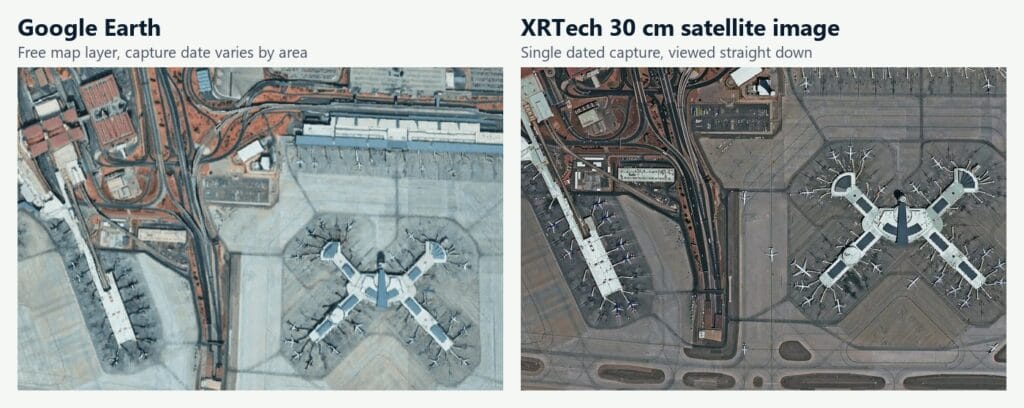
Google Earth layer (left) compared with a fresh XRTech Group 30 cm satellite image (right) over Harry Reid International Airport, Las Vegas.
Can the Highest Resolution Satellites See People or Licence Plates?
No. Even the highest resolution satellites cannot identify people or read licence plates. At 30 cm, a person is only one or two pixels: you can see that someone is there, not who they are. Reading a licence plate needs roughly 5 cm resolution, which no commercial satellite offers. The limit is physics: a telescope's sharpest angle is about 1.22 x wavelength / mirror diameter. For visible light at 500 km altitude, a 1.1 m mirror resolves about 30 cm, and resolving 5 cm would need a mirror of nearly 7 m.
Military reconnaissance satellites are believed to reach around 10 to 15 cm, but their specifications are classified. Commercial resolution is also shaped by licensing rules in each country.
Highest Resolution Satellite Imagery Applications by Resolution Tier
The highest resolution satellite imagery is not always the best choice. Higher resolution costs more and covers less ground per scene, so match the tier and sensor to the job.
Ultra High Resolution Satellite Imagery Applications (15 cm HD)
Inspect rooftops, solar panels and storm damage, count vehicles, check construction details and monitor small assets with near-aerial clarity, without flying a plane or drone.
Very High Resolution Satellite Imagery Applications (25 to 49 cm)
Track construction progress, verify environmental restoration, support insurance claims and disaster response, and monitor ports, airports, pipelines and borders where vehicles and structures must be identified.
High Resolution Satellite Imagery Applications (50 to 99 cm)
Create base maps, plan utilities and transport corridors, update cadastral and urban planning layers, and produce stereo elevation models across whole cities and districts.
Medium and Low Resolution Applications (1 m and Coarser)
Monitor crops, forests, mangroves and wetlands, map land cover, track droughts and floods, and study climate trends across regions and countries, often with free Sentinel-2 and Landsat data.
Quick reference: the recommended resolution and sensor for common projects.
Application
Recommended resolution
Best sensor type
Construction progress and asset inspection
15 to 30 cm
Very high resolution optical, HD 15 cm
Urban planning and cadastral mapping
30 to 50 cm
Optical, stereo for 3D
Insurance and disaster damage
30 to 50 cm, plus SAR
Optical and SAR together
Agriculture and crop health
2 to 10 m
Multispectral with red edge (SuperView-2, Sentinel-2)
Mineral exploration
5 to 30 m
Hyperspectral, with 30 cm optical for access
Floods, ships and night monitoring
1 to 3 m
SAR (C-band or X-band)
Ground subsidence and deformation
Millimetre-scale
L-band InSAR (LT-1)
How to Access the Highest Resolution Satellite Imagery
Buying the highest resolution commercial satellite imagery no longer needs a long procurement process. With XRTech Group it takes five steps:
- Define your area and needs: draw or upload your area of interest (KML, SHP or GeoJSON) and set the resolution, dates and maximum cloud cover. If you only have an address, get its coordinates with our free GPS coordinates finder.
- Search the archive: check existing 25 cm, 30 cm and 50 cm imagery in the satellite imagery portal. Archive is the fastest and cheapest route.
- Task a new capture: if no recent image exists, schedule an optical or SAR satellite to capture your site on your dates.
- Choose processing: orthorectification, pansharpening, HD 15 cm enhancement, stereo elevation models or hyperspectral analysis.
- Receive GIS-ready data: download GeoTIFF or other formats straight into ArcGIS, QGIS or your analytics platform, with a licence that covers your project.
Free imagery follows a different route: Sentinel-2 and Landsat scenes can be downloaded at no cost from the Copernicus Browser, USGS EarthExplorer or Google Earth Engine.
How Much Does the Highest Resolution Satellite Imagery Cost?
The highest resolution satellite imagery costs from $20/km² for 25 cm archive imagery from XRTech Group, typically delivered within 48 hours. Price depends on three things:
- Archive or tasking: imagery that already exists is priced lowest per km². A fresh capture on your dates costs more and usually has a larger minimum area, because the satellite is scheduled for you.
- Resolution and sensor: 25 to 30 cm, SAR spotlight and hyperspectral data cost more per km² than standard 50 cm to 1 m imagery.
- Area: larger orders lower the price per km².
Buy the Highest Resolution Satellite Imagery From XRTech Group
XRTech Group is a geospatial intelligence company that supplies optical, SAR and hyperspectral satellite imagery, elevation models and GIS analytics to governments, enterprises and researchers worldwide. It gives access to more than 130 satellites through one order:
- Optical: SuperView Neo-1 03/04 at 25 cm, SuperView Neo-1 and Beijing-3B at 30 cm, SuperView-2 at 42 cm with 8 bands, SuperView Neo-3 at 50 cm with a 130 km swath, GF-7 stereo at 65 cm, and HD 15 cm processing.
- SAR: GF-3 C-band at up to 1 m in 12 modes, and LT-1 L-band at 3 m for InSAR with 1 to 2 mm deformation accuracy.
- Hyperspectral: GF-5B with 330 channels, ZY-1 02D, and Wyvern Dragonette at 5.3 m.
- Elevation: stereo and tri-stereo capture for DEM, DSM and DTM production.
As a non-US provider, XRTech delivers worldwide without US export licence delays. Imagery comes as GIS-ready GeoTIFF with archive and new tasking options, and every order can start with a free sample.
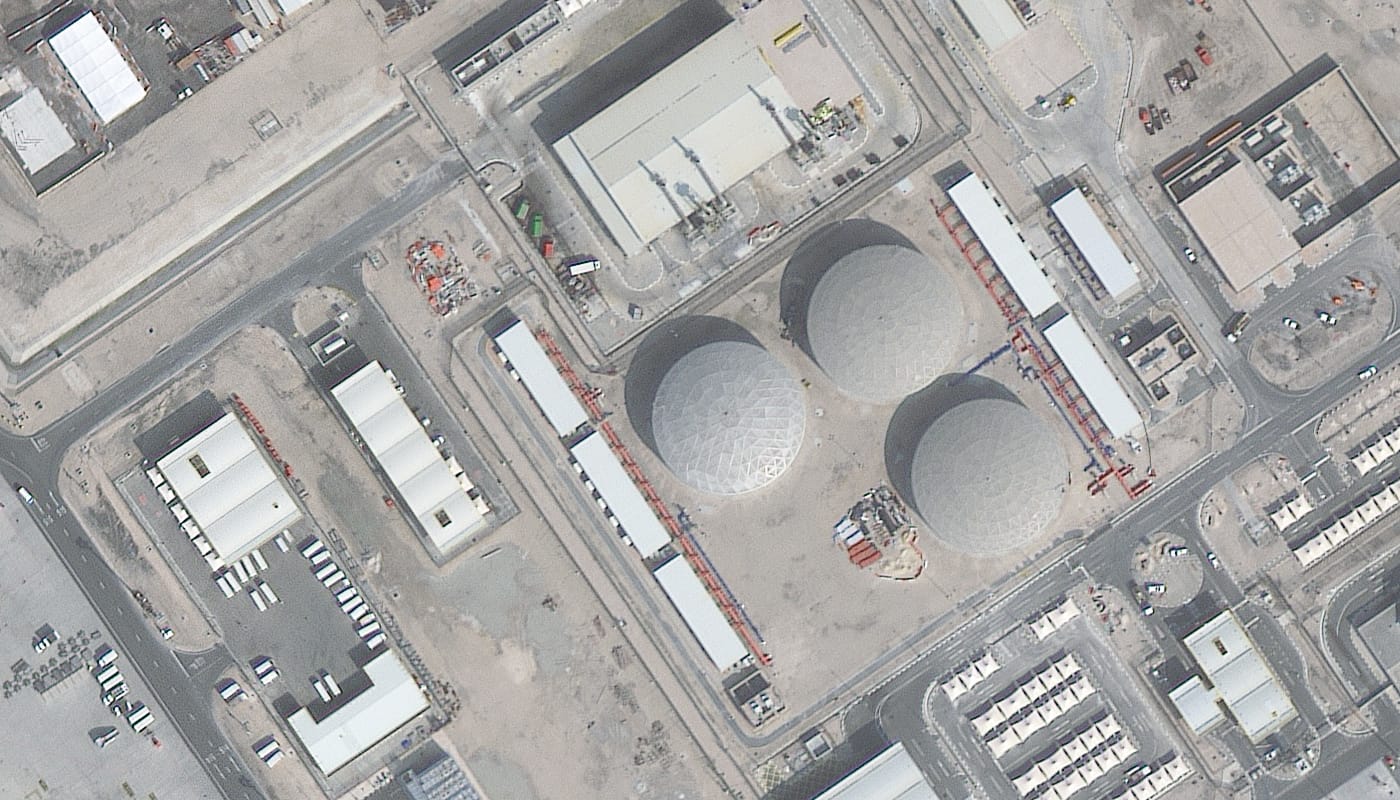
XRTech Group sample: 30 cm Beijing-3B (BJ3N) satellite image of Doha, Qatar.
The Future of Highest Resolution Satellite Imagery
The next generation of high resolution imaging satellites will push detail, revisit speed and sensor fusion further:
- 20 cm class optical: Vantor Vantage and Airbus Pléiades Neo Next, both in development, aim to move the native commercial limit from today's 25 to 30 cm to about 20 cm later this decade.
- Faster revisit: Vantor's planned Pulse fleet of 40 cm class satellites targets revisits every 15 minutes, while the SuperView Neo constellation keeps adding very high resolution, wide-swath and SAR satellites.
- Very low Earth orbit: satellites flying below 300 km promise 10 cm optical imagery. Albedo's Clarity-1 showed the challenge: it reached orbit but lost contact before delivering calibrated 10 cm images.
- Sharper radar and hyperspectral: SAR spotlight modes have reached 16 cm, and new hyperspectral satellites are adding shortwave infrared at about 5 m for mineral and methane mapping.
- AI and onboard processing: satellites such as Beijing-3B process imagery in orbit, while AI super-resolution and automated change detection turn imagery into answers faster.
Get the Highest Resolution Satellite Image for Your Site
Tell us your area, the resolution you need and how recent it must be. We will check 25 cm, 30 cm, SAR and hyperspectral coverage and send a free quote and sample.
How We Compared the Highest Resolution Satellite Imagery
The XRTech Group geospatial team, which sources and delivers satellite imagery for projects worldwide, ranked satellites by native panchromatic GSD at nadir, as published in operator specifications and independent mission databases. We separated native capture from processed HD products, listed only satellites that are operating (not planned or lost), and treated SAR and hyperspectral as separate categories because their resolution is measured differently. Free sources were checked against current data policies. All sample images on this page are XRTech Group imagery. We review this guide whenever a new satellite enters service.
Highest Resolution Satellite Imagery FAQs
What is the highest resolution satellite imagery available today?
The highest resolution commercial satellite imagery is 25 cm native, from SuperView Neo-1 03/04 and SpaceEye-T. Processed HD products reach 15 cm, and SAR satellites reach 16 cm in spotlight mode. XRTech Group supplies 25 cm native and HD 15 cm imagery worldwide.
Which satellite has the highest resolution?
Among commercial imaging satellites, SuperView Neo-1 03/04 and SpaceEye-T have the highest native optical resolution at 25 cm. WorldView Legion, WorldView-3, Pléiades Neo, SuperView Neo-1 and Beijing-3B follow at about 30 cm. SuperView Neo-1 03/04 imagery is available through XRTech Group.
What is the highest resolution commercial satellite imagery I can buy?
You can buy 25 cm native imagery and 15 cm HD processed imagery. XRTech Group supplies both, plus 30 cm imagery from several satellites, through archive or new tasking, with a free sample over your area.
What is the highest resolution free satellite imagery?
Sentinel-2 offers free 10 m imagery worldwide every 5 days. CBERS-4A provides free 2 m panchromatic and 8 m multispectral data through INPE. In the US, NAIP aerial imagery is free at 60 cm, but it is aerial, not satellite. When free data is too coarse, XRTech Group supplies commercial archive imagery from 25 cm to 2 m.
What resolution is Google Earth imagery, and does Google have its own satellites?
Google has no imaging satellites of its own. It licenses commercial satellite imagery, mainly from Vantor and Airbus, and adds aerial photography. City areas can be 15 cm or sharper from aircraft, while many other areas are 30 to 50 cm or coarser, and images can be years old.
Is 15 cm satellite imagery real?
15 cm HD imagery is real but processed. It is created from 25 to 30 cm native captures using super-resolution and resampling. It looks sharper and is easier to interpret, but it does not add detail the sensor did not record.
What is the highest resolution SAR satellite?
Umbra and ICEYE's Gen4 satellites reach 16 cm in their finest spotlight modes, and Capella reaches 25 cm azimuth resolution. SAR resolution is measured differently from optical, so the numbers are not directly comparable.
What is the highest resolution hyperspectral satellite?
Pixxel's Firefly satellites image at about 5 m with 150+ bands, and Wyvern's Dragonette satellites at 5.3 m. Most other hyperspectral missions, such as GF-5B, EnMAP and PRISMA, are 30 m.
Can satellites see people or read licence plates?
Commercial satellites can show a person as one or two pixels at 30 cm, but cannot identify them. Reading a licence plate needs about 5 cm resolution, which is beyond any commercial satellite.
How much does high resolution satellite imagery cost?
Archive imagery is cheapest; XRTech Group supplies 25 cm archive imagery from $20/km². New tasking costs more and has larger minimum orders. SAR spotlight and hyperspectral data are priced higher than standard optical imagery.
What resolution do military satellites have?
Military reconnaissance satellite specifications are classified. Public estimates put the best of them around 10 to 15 cm, limited by the same optics physics as commercial satellites.
Will commercial satellites go beyond 25 cm resolution?
Yes, later this decade. 20 cm class satellites are in development, including Vantor Vantage and Airbus Pléiades Neo Next. Very low orbit missions aim for 10 cm, but none has yet delivered calibrated 10 cm imagery commercially.
Sources
- ESA eoPortal: Clarity, Umbra SAR and Capella X-SAR mission entries
- Via Satellite: Vantor introduces new satellite classes for high resolution imaging
- SpaceNews: Umbra releases highest-resolution commercial satellite image
- NASA Commercial SmallSat Data Acquisition program: vendor resolution listings
- INPE (Brazil): CBERS-4A image catalogue and data policy
- USDA Farm Service Agency: National Agriculture Imagery Program (NAIP)
- Copernicus Programme: Sentinel-1 and Sentinel-2 mission specifications
- USGS: Landsat 8 and 9 mission specifications
- XRTech Group satellite constellation specifications