USGS DEMs vs XRTech Group: Which Elevation Model Wins?

USGS vs XRTech Group Digital Elevation Models: A Comprehensive Guide for 2026
DEM Images services 2-10 m

In the world of geospatial data and terrain analysisDigital Elevation Models (DEMs) serve as the foundational layer for countless applications, from hydrologic modeling and urban planning to military simulation and infrastructure design. They provide a three-dimensional representation of a terrain’s surface, enabling professionals to analyze slope, aspect, visibility, and water flow. Today, organizations and individuals primarily look to two major sources for this critical data: the publicly funded USGS (United States Geological Survey) and commercial providers like XRTech Group.

This detailed comparison explores the key differences, strengths, and ideal use cases for USGS DEMs versus XRTech Group’s DEM services. Whether you’re looking to download DEM USGS data for a domestic project or require high-accuracy, global DEMs for engineering work, understanding these options is crucial for making an informed, cost-effective decision that meets your project’s technical requirements and timeline.

Chapter 1: USGS Digital Elevation Models – The Public Domain Standard
usgs-dem-images-free

The USGS 3D Elevation Program (3DEP) is a monumental public initiative aimed at systematically collecting enhanced elevation data across the United States. Its DEMs are considered the authoritative bare-earth topographic data for the nation.


What Are USGS DEMs?

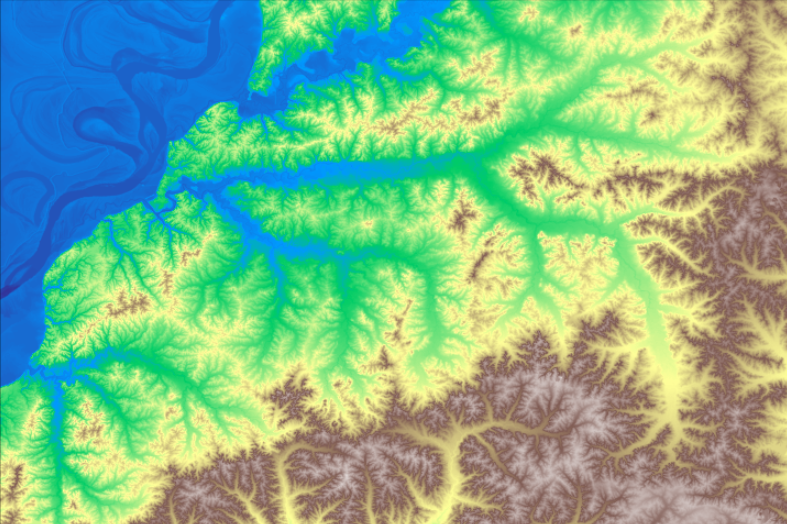
USGS DEMs are raster datasets where each pixel’s value represents the elevation of the bare ground at that point, stripped of vegetation and man-made structures. This Digital Terrain Model (DTM) format is the result of decades of topographic mapping, now modernized through technologies like LiDAR (Light Detection and Ranging) and IfSAR (Interferometric Synthetic Aperture Radar).


📈 Key Specifications & Access


FeatureSpecification
Primary Program3D Elevation Program (3DEP)
Access PlatformThe National Map, USGS EarthExplorer
CostFree and open to the public
Best Resolution1 meter (from LiDAR, not seamless nationwide)
Common Resolutions1m, 1/3 arc-second (~10m), 1 arc-second (~30m)
Vertical DatumTypically NAVD88
Horizontal DatumTypically NAD83
Coverage AreaUnited States and its territories
Update FrequencyVaries by region; LiDAR collection cycles can be 5-10 years.
Data CurrencyCan be outdated; some areas still rely on decades-old source data.


USGS DEM Resolution Levels Explained

USGS provides multiple resolution options, depending on project needs:

1 Meter DEM (Highest Resolution)

• Produced from high-resolution LiDAR
• Tile-based
• UTM projection
• NAVD88 vertical reference
• Not always seamless between projects
• Best for engineering and flood studies

1/3 Arc Second (~10m)

• Seamless national coverage
• Derived from mixed sources
• Good for regional planning

1 Arc Second (~30m)

• Coarser resolution
• Used for national-scale analysis
• Not suitable for engineering

Older Legacy Formats

• 7.5-minute tiles
• 15-minute tiles
• 1-degree tiles
• Mostly outdated


How to Download DEM USGS Data:

  1. Navigate to the USGS National Map Downloader or EarthExplorer.

  2. Define your area of interest (AOI).

  3. Select the desired dataset (e.g., “3DEP 1 Meter DEM”).

  4. Choose the format and download. The process is straightforward for public use.


✅ Advantages of USGS DEMs

  • Cost-Effective: The most significant advantage is that they are free of charge. This makes them ideal for academic research, non-profit projects, and preliminary analyses.

  • Public Domain & Standardized: Data is unencumbered by licensing restrictions and follows consistent national specifications (NAVD88, NAD83).

  • Long Historical Record: The USGS maintains archives, allowing for change detection over time in some regions.

  • High Resolution in Specific Areas: In regions where 3DEP LiDAR projects are complete, the 1-meter DEM quality is excellent for many applications.


❌ Drawbacks & Limitations of USGS DEMs

  • Limited Global Coverage: USGS DEM coverage is fundamentally restricted to U.S. territories. Projects in Asia, Africa, Europe, or South America cannot be serviced.

  • Inconsistent Currency and Seamlessness: Data is not collected simultaneously nationwide. You may find a state-of-the-art 2023 LiDAR DEM adjacent to a 10-year-old dataset, causing seams and accuracy jumps. The 1m data is not nationally seamless.

  • No Custom Tasking: You cannot request new data collection for your specific area or timeline. You are limited to what is already in the archive.

  • Accuracy Variability: While LiDAR-derived DEMs are accurate, older datasets derived from topographic maps or photogrammetry can have significant vertical errors (often +/- 5-15 meters).

  • Limited Product Types: The USGS primarily provides DTMs (bare-earth)Digital Surface Models (DSMs) that include buildings and trees are less commonly available as standard products.

  • No Value-Added Processing: The data is provided “as-is.” You won’t get custom formatting, specific coordinate systems, or advanced derivatives like contour lines without doing the work yourself.

Expert Insight: For a quick, free topographic analysis within the United States, USGS data is the first stop. However, for engineering design, global projects, or applications requiring guaranteed recency and accuracy, its limitations become immediately apparent.

Chapter 2: XRTech Group DEMs – The Commercial-Grade Global Solution

DEM types

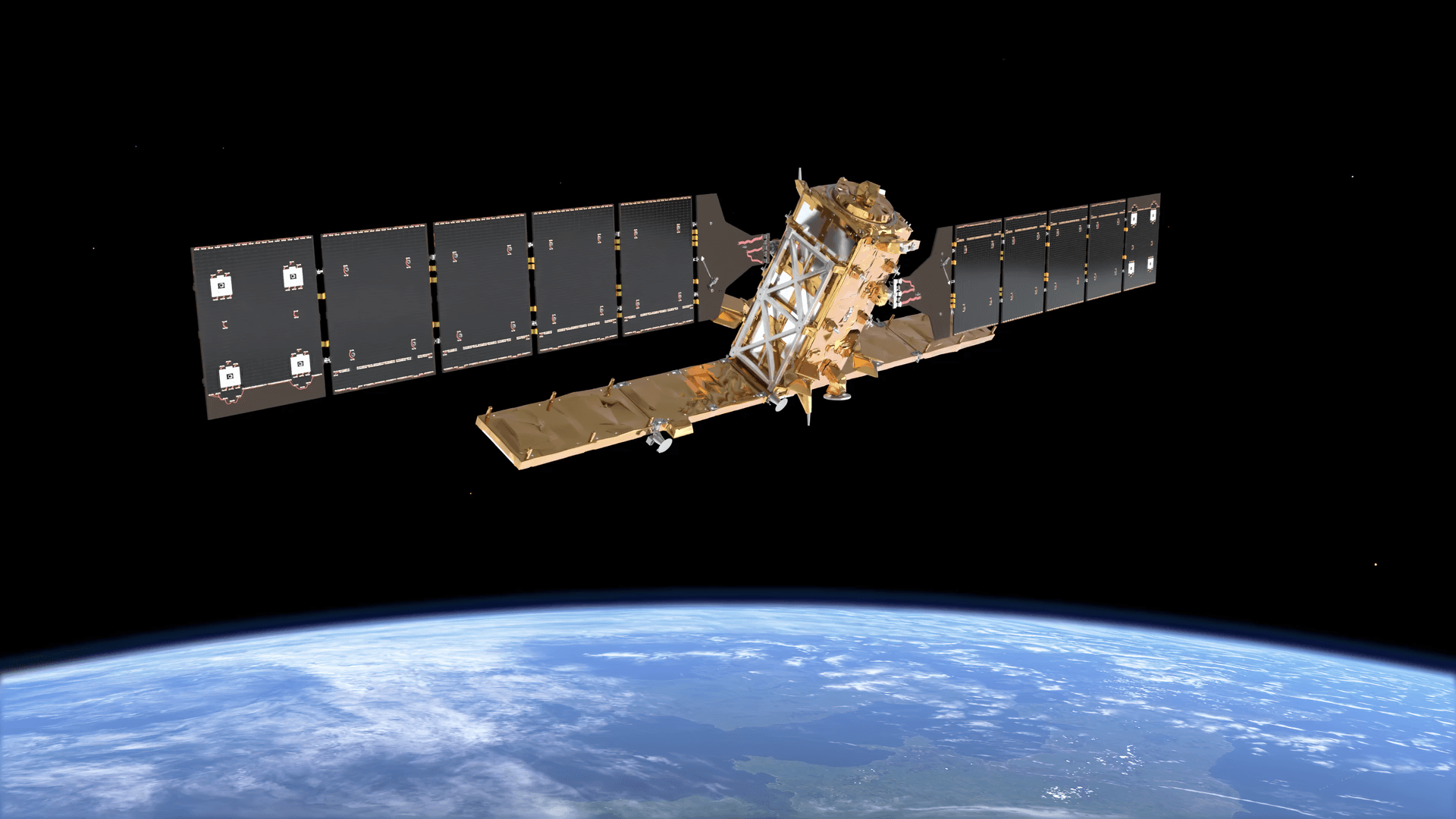
XRTech Group represents the next generation of DEM provision, leveraging a global satellite constellation to deliver on-demand, engineering-grade terrain data for any location on Earth. This is a service built for professionals who cannot compromise on accuracy, timeliness, or geographic scope.


🛰️ What Are XRTech Group DEMs?

XRTech builds its Digital Elevation Models using advanced stereo photogrammetry and SAR (Synthetic Aperture Radar) data from a fleet of over 130 satellites, including partners like China Siwei. This method allows them to generate 3D models by capturing the same location from multiple angles, creating “binocular vision from space.” They offer a full suite of elevation products:

  1. Digital Elevation Model (DEM): Bare-earth model, comparable to USGS products.

  2. Digital Surface Model (DSM): Includes heights of all surface features (buildings, trees).

  3. Digital Terrain Model (DTM): An enhanced bare-earth model with breaklines for hydrological and engineering precision.

⚙️ Technical Specifications & Performance


FeatureXRTech Group Specification
Source TechnologyStereo Satellite Imagery (Optical & SAR), optional LiDAR
CoverageGlobal (Any landmass on Earth, including sensitive regions)
Vertical Accuracy±3m RMSE (Standard), ≤1m RMSE with GF-7 stereo mapping
Point Spacing2m to 10m (customizable)
Horizontal AccuracySub-meter to meter-level (CE90 standard)
Data CurrencyArchive data or fresh tasking on demand
All-Weather CapabilityYes, via SAR satellites that penetrate clouds and darkness
Advanced AnalyticsInSAR for millimeter-level deformation monitoring (e.g., dams, landslides)


XRTech Group DEM Pricing & Delivery

XRTech operates on a project-based commercial pricing model with flexible turnaround times.

Resolution Tier Archive Data
(≥90 days old)
New Tasking
(Fresh Collection)
Min. Order
High Res (51–80 cm) $5 / km² $8 / km² 25 km² (Archive)
100 km² (New)
Very High Res (31–50 cm) $13 / km² $20 / km² 25 km² (Archive)
100 km² (New)
Super High Res (30 cm) $20 / km² $30 / km² 25 km² (Archive)
100 km² (New)
  • Stereo Collection (for DEM generation): Typically 2x the mono imagery price.

  • Delivery Time: Under 21 days for custom DEMs. Emergency response imagery can be prioritized within 24 hours.

  • Formats: Delivered in ready-to-use GeoTIFF, SHP, DWG, IMG formats for GIS/CAD workflows.


Advantages of XRTech Group DEMs

  • Truly Global Coverage: Access DEMs for any country or remote region, bypassing political or logistical barriers that ground surveys face.

  • Guaranteed Freshness & Tasking: Don’t rely on archives. You can commission new data collection to ensure the model reflects the current terrain, crucial for post-disaster or active construction sites.

  • Superior Accuracy & Consistency: ±3m vertical RMSE is an engineering-grade standard suitable for planning and design. This accuracy is consistent across the project area.

  • Comprehensive Product Suite: Choose from DEM, DSM, or DTM based on your need. This is vital for applications like flood modeling (DEM) or 5G network planning (DSM).

  • All-Weather, Day/Night Data: SAR-based elevation models eliminate the “cloud problem,” ensuring delivery regardless of weather in tropical or monsoon-prone regions.

  • No Export License Delays: As a non-U.S. provider, XRTech avoids International Traffic in Arms Regulations (ITAR) and other export control delays, speeding up delivery for international clients.

  • Value-Added Services: From orthorectification and contour generation to integration with AI analytics on the Siwei Earth Cloud platform, XRTech provides solutions, not just raw data.

Chapter 3: Side-by-Side Comparison Table

This direct comparison highlights the fundamental trade-offs between free public data and a premium global service.


CriteriaUSGS DEMs (3DEP Program)XRTech Group DEMs
CostFREE (Public Domain)Commercial (Project-based quote)
CoverageUnited States & Territories OnlyGlobal (Anywhere on Earth)
Best Resolution1 meter (LiDAR, not seamless)30 cm (Satellite, seamless per project)
Standard AccuracyVaries (Older data: ±5-15m, LiDAR: ±0.1-0.3m)Guaranteed ±3m RMSE (Standard)
Data CurrencyArchive Only (No new collection)Archive or On-Demand Fresh Tasking
Update ControlNo control (Follows USGS schedule)Full control (Task when you need it)
Product TypesPrimarily DEM/DTM (Bare-earth)DEM, DSM, DTM (Full suite)
Weather LimitationsYes (Optical sensors require clear skies)No (SAR satellites penetrate clouds)
Delivery TimeImmediate (for download)<21 days (Custom DEM), <7 days (imagery)
Ideal ForDomestic US projects, education, non-profits, preliminary studiesGlobal engineering, infrastructure, mining, defense, urgent response


Chapter 4: Choosing the Right DEMs Provider – Use Case Scenarios

 When to Choose (and Download) USGS DEMs:

  • Academic Research & Theses: Perfect for students and researchers analyzing U.S. geography where budget is primary.

  • Preliminary Site Assessment in the USA: Getting a first look at topography for a potential project within the U.S.

  • Public Planning & Community Projects: Local government initiatives requiring authoritative, free data for zoning or environmental reviews.

  • Hobby & Personal Use: Creating topographic maps for hiking, hunting, or other recreational activities.

When to Choose XRTech Group DEMs:

  • International Infrastructure Projects: Planning roads, railways, or pipelines in Africa, Asia, or South America.

  • Mining & Resource Exploration: Needing current, accurate terrain models for remote claim blocks to calculate overburden and plan access.

  • Engineering & Design: Requiring ±3m accuracy for hydrological modeling, cut/fill calculations, or foundation design.

  • Disaster Response & Recovery: Needing a post-event terrain model within days to assess landslide risks, flood damage, or plan relief logistics.

  • National Security & Defense: Creating realistic terrain models for simulation and mission planning in denied or sensitive areas.

  • When Time is Critical: You cannot wait for the USGS to eventually map an area or need data synchronized to a specific project milestone.


Accuracy Comparison

FeatureUSGS DEMXRTech DEM
Vertical accuracyVaries by project±3m RMSE
Horizontal accuracyProject dependentCE90
Urban modelingLimitedHigh precision
Mining useNot idealOptimized
InfrastructureModerateEngineering grade


Coverage Comparison

ProviderCoverage
USGSUSA only
XRTechGlobal

XRTech works in:

• Remote regions
• Conflict zones
• Dense forests
• Deserts
• Mountains
• Islands


Cloud Handling

FeatureUSGSXRTech
Cloud removalManualAutomated
SAR capabilityNoYes
Monsoon regionsDifficultWorks

XRTech uses SAR sensors to penetrate:

• Clouds
• Smoke
• Rain
• Darkness


Change Detection & Monitoring

USGS:

• Static datasets
• No frequent updates

XRTech:

• Daily revisit
• Time-series monitoring
• InSAR movement tracking
• Dam deformation detection
• Landslide monitoring


Why USGS DEM May Not Be Enough

USGS DEMs are excellent for research, but fail for:

• Highway design
• Mining volume calculation
• Pipeline routing
• Telecom tower placement
• Military planning
• Smart city development

Because:

• Data age varies
• Resolution inconsistent
• No fresh capture
• No guaranteed accuracy
• No liability support


XRTech Group DEMs

XRTech solves every USGS limitation.

1. Global Coverage

No country restrictions.
Works anywhere on Earth.

2. Fast Tasking

New imagery captured within days.
No waiting for government updates.

3. All-Weather SAR

Works through:

• Clouds
• Smoke
• Night
• Rain

4. Engineering Accuracy

±3m RMSE standard.
Sub-meter with LiDAR.

5. InSAR Monitoring

Detects:

• Building subsidence
• Dam movement
• Landslide shifts
• Pipeline deformation

Accuracy: 1–2 mm

6. No Export Barriers

USGS has restrictions.
XRTech delivers worldwide.

7. Emergency Response

Disaster data in 24 hours.


XRTech’s DEMs Applications

IndustryUse
Civil engineeringCut & fill
HydrologyFlood modeling
MiningPit design
EnergyPipeline routing
DefenseTerrain simulation
TelecomSignal modeling
Smart citiesUrban planning


Why Choose XRTech Group Over USGS

If your project needs:

• Legal-grade accuracy
• Recent data
• Cloud-free imagery
• Global access
• SLA support
• Custom projections
• Fast delivery

USGS is not enough.
XRTech becomes mandatory.


When USGS DEM Is Still Good

Choose USGS when:

• Budget is zero
• Research purpose
• Large-scale mapping
• Non-critical accuracy
• US-only coverage


Conclusion: The Future of Elevation Data

The choice between USGS DEMs and XRTech Group DEMs is not about one being universally “better,” but about selecting the right tool for your specific project’s requirements.

The USGS 3DEP program is an invaluable public asset that democratizes access to foundational geospatial data within the United States. For domestic applications where cost is the overriding factor and absolute precision is less critical, it remains the first and best resource.

XRTech Group, however, addresses the modern, globalized needs of industry and government. It removes the geographic, temporal, and accuracy limitations of traditional sources. By providing taskable, weather-independent, and engineering-grade DEMs for any coordinate on the planet, XRTech empowers professionals to make decisions with confidence, speed, and precision that free data cannot match.

Ultimately, if your project transcends U.S. borders, demands guaranteed accuracy and currency, or supports high-stakes engineering and financial decisions, the commercial investment in a service like XRTech Group’s is not just an option—it’s a strategic necessity.


Blog Summary – USGS Digital Elevation Models vs XRTech DEMs

  • USGS digital elevation models are free raster datasets representing bare-earth terrain across the United States, ideal for research, hydrologic modeling, slope analysis, and academic use, but limited to U.S. coverage only.
  • USGS DEM products range from 1-meter LiDAR resolution to 30-meter national datasets, accessible via download DEM USGS through The National Map under the 3DEP program.
  • A digital elevation model (DEM) stores elevation per pixel, enabling 3D terrain visualization, flood mapping, watershed modeling, and disaster risk analysis.
  • USGS DEMs are referenced to NAVD88 vertical datum and NAD83 horizontal datum, making them consistent but not always seamless between projects.
  • XRTech Group delivers satellite-derived DEMs, DSMs, and DTMs using a 130+ satellite constellation for global terrain mapping, even in remote or politically sensitive regions.
  • XRTech DEMs provide ±3m vertical RMSE accuracy, CE90 horizontal precision, and resolutions from 30cm to 10m, with optional sub-meter LiDAR upgrades.
  • Unlike USGS, XRTech integrates SAR sensors to capture elevation through clouds, smoke, rain, and darkness, making it reliable for tropical and monsoon regions.
  • XRTech supports InSAR monitoring with millimeter-level detection (1–2mm) to track ground deformation, dam stability, subsidence, and landslide movement.
  • USGS DEMs are best for students, researchers, and budget projects needing free U.S.-based data, while XRTech DEMs are ideal for engineering, mining, telecom, defense, and smart city applications.
  • Choose XRTech Group if you need global coverage, real-time satellite tasking, fast delivery under 21 days, CAD/GIS-ready formats, cloud-free mosaics, and guaranteed accuracy.

Related Posts

Request Satellite Imagery Form

Request Product Details