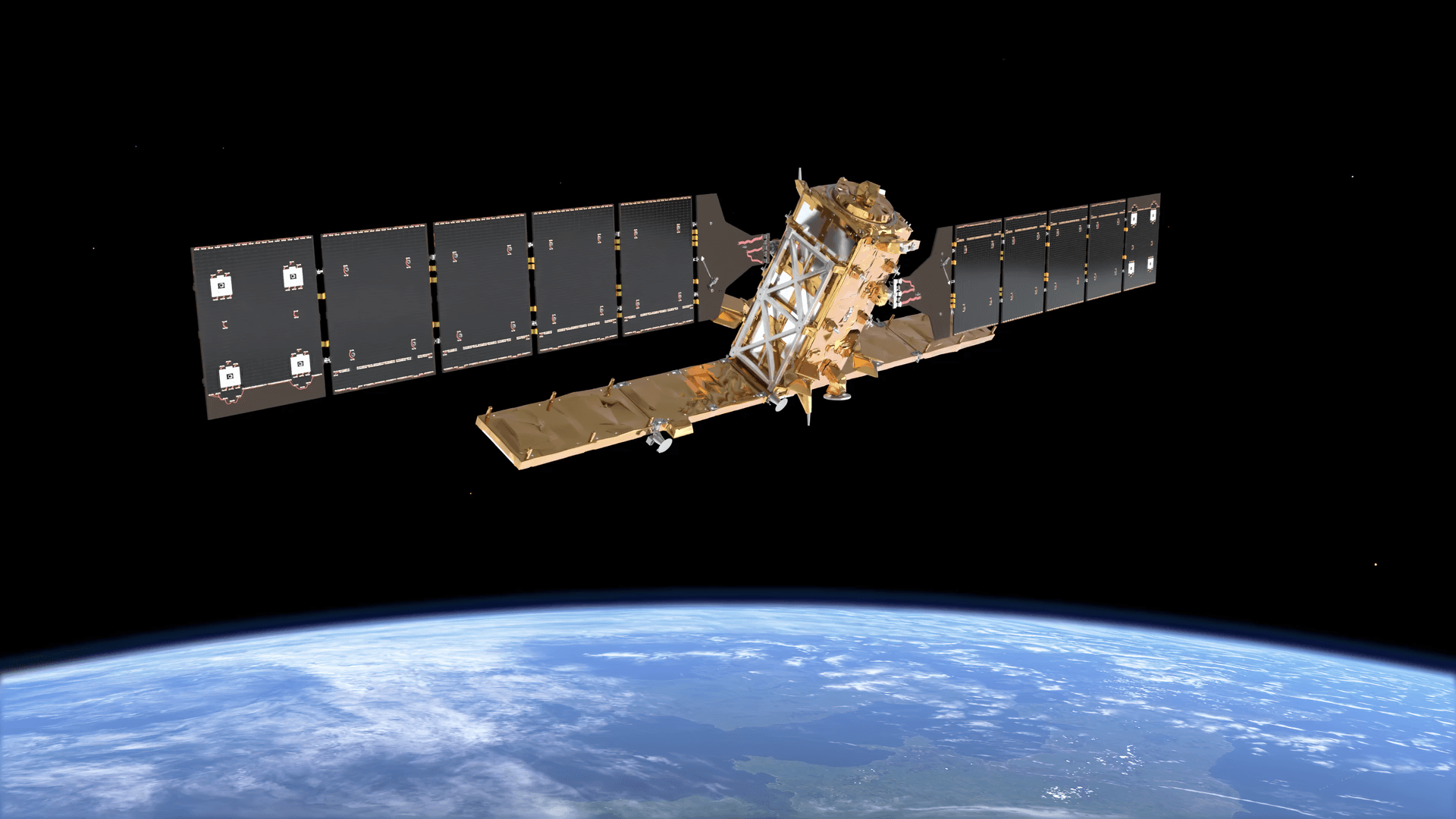
By Mustafa Jawaad, General Manager, XRTech Group. Updated 4 October 2026 with the latest CelesTrak, Jonathan McDowell and ESA figures.
Quick answer: There are about 16,900 working satellites in space right now. Astronomer Jonathan McDowell's catalog counted 16,913 active satellites on 30 September 2026, and the public CelesTrak catalog listed 16,633 on 4 October 2026. About 11,150 of them, two in every three, are SpaceX Starlink satellites. Add the roughly 2,900 dead satellites that are still circling Earth, and the total number of satellites in orbit is close to 19,500.
The count changes every week. New batches go up every few days, while old satellites are lowered to burn up in the atmosphere. This guide gives you the latest verified number, explains why sources disagree, and breaks the total down by orbit, operator, country, job and year. Every figure carries its source and date, so you can check it yourself.
How Many Satellites Are in Space? Key Numbers at a Glance
Each figure below counts something slightly different, so read it together with its source and date.
What is counted
Latest figure
Source and date
Working (active) satellites
16,913
Jonathan McDowell's catalog, 30 Sep 2026
Active satellites in the public tracking catalog
16,633
CelesTrak, 4 Oct 2026
Active Starlink satellites
11,149
CelesTrak, 4 Oct 2026
Satellites still in space, working or dead
About 18,840
ESA, 31 Jul 2026
Dead satellites still in orbit
About 2,900
ESA, 31 Jul 2026 (18,840 in space minus about 15,900 working)
Satellites ever placed in Earth orbit
About 27,490
ESA, 31 Jul 2026
Tracked objects, including rocket bodies and debris
About 47,140
ESA, 31 Jul 2026
Debris pieces from 1 to 10 cm
About 1.5 million
ESA MASTER-8 model
Countries that have operated a satellite
More than 80
Public satellite catalogs
Why Do Satellite Counts Differ Between Sources?
Search for how many satellites are in space and you will find numbers that differ by a few hundred, or even a few thousand. Usually none of them is wrong. Each source counts in its own way:
- What counts as working. McDowell counts satellites that still steer or talk to the ground. CelesTrak lists satellites that show recent signs of activity. ESA counts functioning satellites in a slower periodic review.
- Brand new launches. Satellites launched this week may be missing from one list and already on another.
- Satellites on the way down. Old Starlink satellites being lowered to burn up can stay on active lists for weeks.
- Update schedules. CelesTrak refreshes every two hours. ESA's statistics update a few times a year, so they trail behind.
- Old sources. The Union of Concerned Scientists database, still quoted in many articles, stopped at 7,560 satellites on 1 May 2023. Any page that quotes it is more than 9,000 satellites out of date.
Source
What it counts
Count
Updated
Jonathan McDowell, Harvard and Smithsonian Center for Astrophysics
Active payloads
16,913
30 Sep 2026
CelesTrak
Active satellite catalog
16,633
4 Oct 2026
ESA Space Debris Office
Functioning satellites
About 15,900
31 Jul 2026
Union of Concerned Scientists
Operational satellites
7,560
1 May 2023, no longer updated
So when you read any satellite count, check two things: its date and what it counts. In this guide we lead with McDowell's active count, because it separates working satellites from dead ones and is updated often. We use the CelesTrak catalog for the breakdowns by orbit, constellation and country.
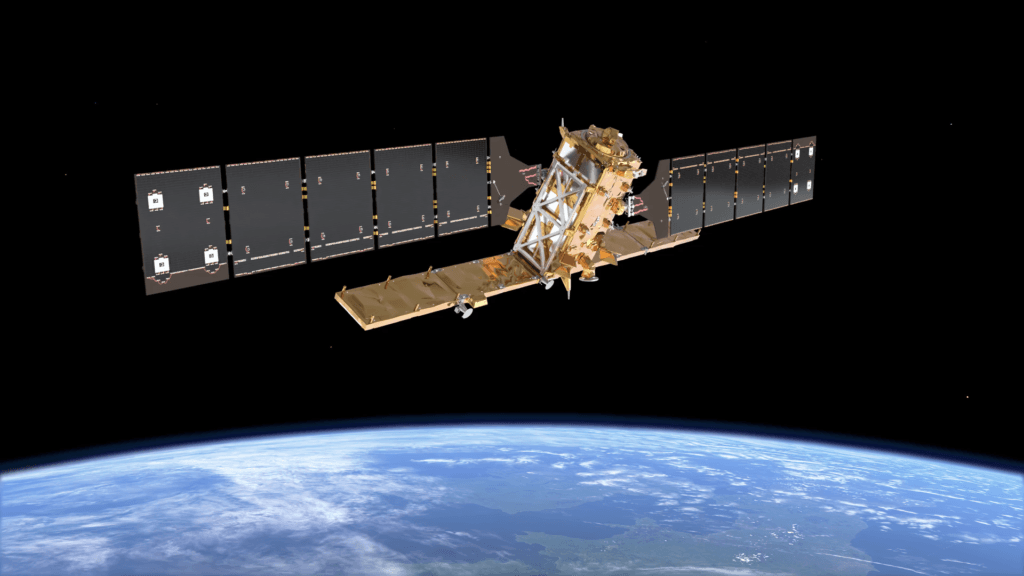
Once a satellite is tracked it keeps its catalog number for life. Whether it counts as active depends on who is counting.
How Many Satellites Are Orbiting Earth? Growth by Year
For decades the number of working satellites grew slowly. It took more than 60 years after Sputnik 1 to reach about 2,000. Since the first Starlink batch went up in May 2019, the count has grown more than eightfold.
Date
Working satellites in orbit
4 October 1957
1 (Sputnik 1)
Early 2019, before Starlink
About 2,000
End of 2020
About 3,400
End of 2022
About 6,700
End of 2024
About 11,500
End of 2025
About 14,300
30 September 2026
16,913
That works out to about 2,700 net new working satellites in 2025, and about 2,650 more in the first nine months of 2026, even after the satellites that were retired and burned up are taken away. Figures before 2026 are rounded and compiled from the Union of Concerned Scientists database and McDowell's catalog.
How Many Satellites Are in Low, Medium and High Orbit?
Satellites fly at very different heights, and the height decides the job. Here is how the 16,633 active satellites in the CelesTrak catalog split by orbit on 4 October 2026:
Orbit
Height and time for one lap
Active satellites
Typical users
Low Earth orbit (LEO)
Up to 2,000 km; about 90 to 120 minutes
15,819
Starlink, imaging satellites, space stations
Medium Earth orbit (MEO)
2,000 to 35,786 km; about 12 hours at GPS height
207
GPS, Galileo, GLONASS, BeiDou
Geostationary orbit (GEO)
35,786 km; 24 hours, so it stays over one spot
562
TV, weather watching, long-distance links
Highly elliptical orbit (HEO)
Swings from low to very high; often 12 hours
45
Coverage of the far north
In other words, about 95 in every 100 working satellites fly low. Low orbit is cheaper to reach, and a signal takes only a few thousandths of a second to go up and come back. That short delay is why internet and imaging fleets crowd into LEO, while TV and weather satellites that must stay over one spot sit far out in GEO. From geostationary height, one satellite sees about 40% of the planet at once.
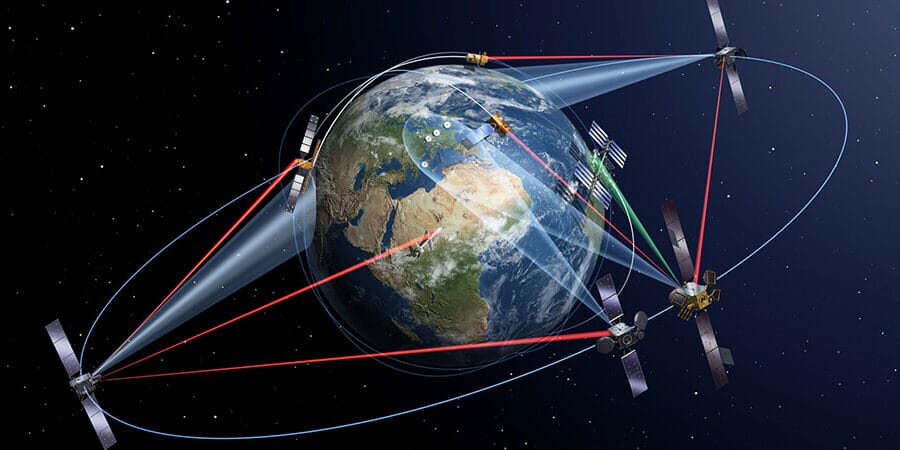
Most satellites fly in low Earth orbit, a few hundred kilometres up. Navigation satellites sit in medium orbit and TV and weather satellites in geostationary orbit.
How Many Starlink Satellites Are in Orbit?
SpaceX has launched about 12,900 Starlink satellites since 2019. On 4 October 2026, 11,149 of them were in CelesTrak's active catalog, and McDowell counted 11,143 working on 30 September. That is about two of every three active satellites in space. Take Starlink away and the world has about 5,500 to 5,800 working satellites.
The next step has already started. On 28 September 2026, SpaceX's Starship reached orbit for the first time on its 14th flight and released 26 Starlink V3 satellites. SpaceX says each V3 satellite adds about 1 terabit per second of capacity, so one Starship load adds about ten times the capacity of a Falcon 9 load of the older V2 Mini satellites. The network can now grow in capacity faster than it grows in numbers.
A megaconstellation is a fleet of hundreds or thousands of satellites that work together as one network. These fleets explain nearly all of the recent growth. Here are the largest:
Constellation
Owner
Active now
Planned
Starlink
SpaceX, United States
11,149
About 12,000 approved in its first two generations, tens of thousands more filed
OneWeb
Eutelsat OneWeb, UK and France
651
About 650 in the first generation
Amazon Leo (formerly Project Kuiper)
Amazon, United States
About 400
3,236
Qianfan (Thousand Sails)
Shanghai Spacecom, China
257
About 14,000
Guowang
China SatNet, China
213
About 13,000
Iridium
Iridium, United States
80
66 working plus spares
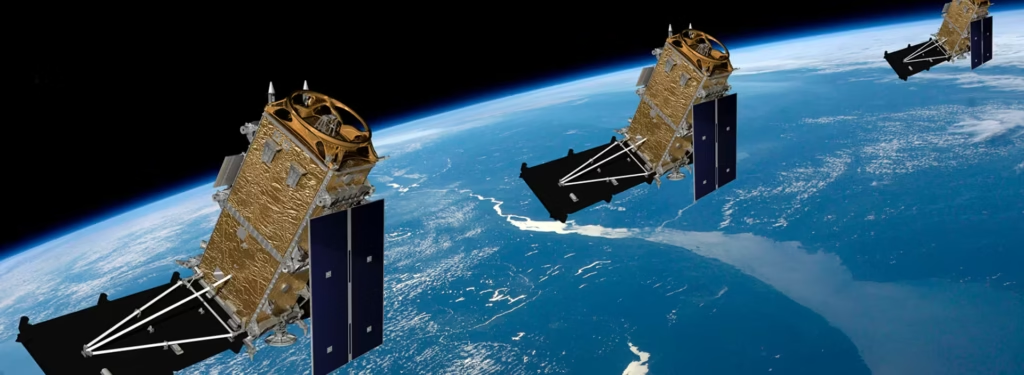
Most constellations are small, like Canada's three-satellite RADARSAT Constellation Mission. Starlink, by contrast, has more than 11,000.
How Many GPS and Navigation Satellites Are There?
The US GPS constellation has 31 operational satellites. The system needs at least 24 to cover the whole planet, and the extra ones act as live backups that also improve accuracy. They fly in medium Earth orbit about 20,200 km up, spread across six orbit paths, and each one circles Earth twice a day. Your phone needs signals from at least four satellites at once to fix its position, but it does not rely on GPS alone:
Navigation system
Satellites
GPS (United States)
31 operational, 24 needed at minimum
Galileo (European Union)
34 launched as of 31 August 2026
BeiDou (China)
About 45 operational
GLONASS (Russia)
About 24 operational
NavIC (India) and QZSS (Japan)
Regional systems of a few satellites each
Together that adds up to about 130 navigation satellites. As a result, a modern phone can often see 20 or more of them at once, which helps it find you quickly even between tall buildings.
What Do All These Satellites Do?
Every satellite has a main job. Thanks to the internet fleets above, communications satellites now make up roughly three of every four working satellites. The rest share a handful of other jobs:
- Communications: internet, phone, TV and data links. This is by far the biggest group.
- Earth observation: satellites that photograph or scan the ground with cameras, radar or special sensors to track crops, cities, floods, ships and forests. There are well over a thousand of them, run by governments and companies. See our guide to every commercial imaging satellite in space.
- Navigation: GPS and the other systems covered above.
- Weather: from low satellites that pass over the poles to geostationary ones that watch storms around the clock.
- Science and technology: space telescopes, test satellites and small student CubeSats.
- Military and intelligence: spy, early warning and secure communications satellites, many of which are never publicly described.
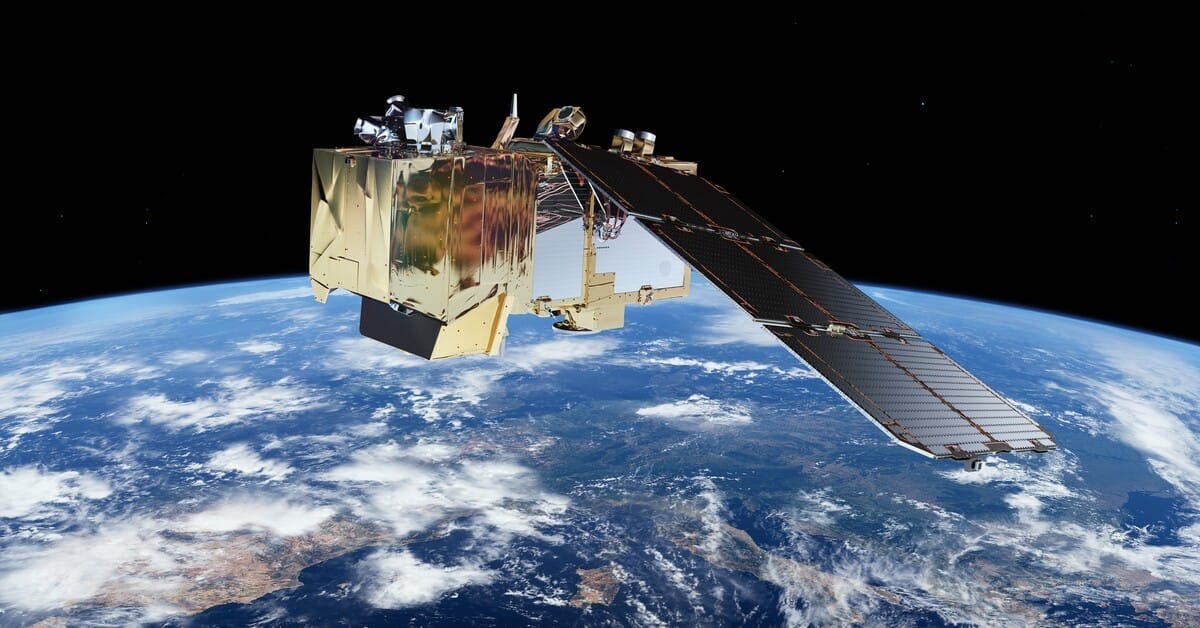
Sentinel-2 is one of the Earth observation satellites that photograph the whole land surface every few days.
Which Country Has the Most Satellites in Orbit?
The United States runs far more satellites than any other country, mostly because of Starlink. These are the top countries by active satellites in the CelesTrak catalog in early October 2026:
Country
Active satellites
United States
12,531
China
1,543
United Kingdom (includes OneWeb)
697
Russia
382
Japan
134
Italy
78
India
77
France
70
European Space Agency (multinational)
68
Germany
67
South Korea
60
Canada
53
Here is a surprising detail. Take Starlink out of the count and the United States drops to about 1,400 satellites, which would put China in first place. Meanwhile the list keeps getting longer at the bottom: more than 80 countries have now operated at least one satellite, and countries such as the UAE, Saudi Arabia and Turkey are growing their own fleets.
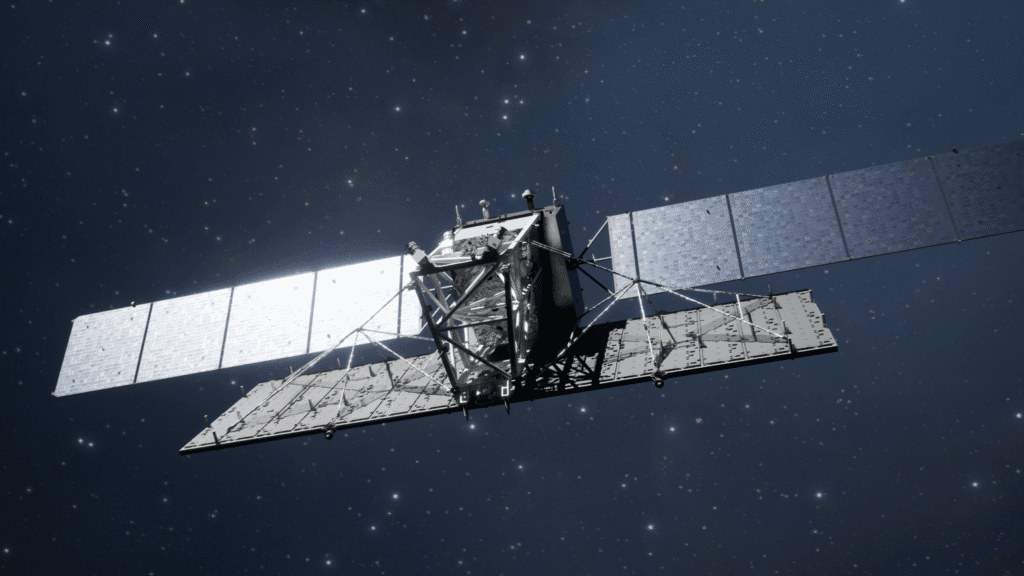
China now runs more than 1,500 active satellites, including radar satellites like the LT-1 pair.
How Many Satellites Are Launched Each Year?
More than ever. 2025 was the busiest year in spaceflight history, with 329 orbital launch attempts, 321 of which reached orbit, according to McDowell. ESA counted more than 4,000 new payloads put into orbit that year, about ten a day. 2026 is on a similar pace, with 229 launches reaching orbit by early October, and SpaceX flies about half of all launches worldwide. Here is what drives the pace:
- Cheaper, smaller satellites: many new satellites weigh a few hundred kilograms or less, and dozens can ride on one rocket.
- Reusable rockets: Falcon 9 boosters now fly again and again, which cuts the cost of every launch.
- Constant turnover: on an average day more than three intact satellites or rocket bodies fall back into the atmosphere, so part of every launch simply replaces what came down.
- Stricter disposal rules: operators in low orbit now aim to bring dead satellites down within five years instead of 25, so fleets are refreshed more often.
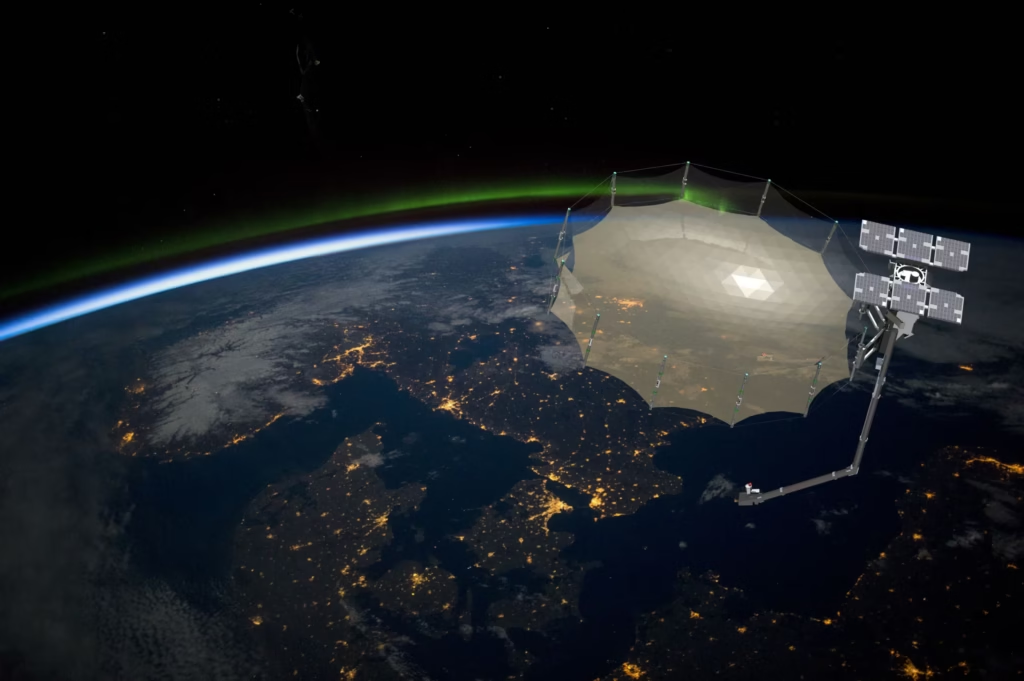
Small commercial satellites, like this Capella radar satellite, are a big part of the boom.
How Many Satellites Will There Be Next Year?
If the pace of the last two years holds, about 2,700 to 3,500 net new working satellites a year, the count will pass 20,000 during 2027 and reach roughly 20,000 to 21,500 by the end of 2027. That is our own projection from McDowell's figures, not an official forecast. Several things could push it higher:
- Starship launches: each flight can carry dozens of the much larger Starlink V3 satellites.
- Amazon Leo: Amazon plans 3,236 satellites and has only about 400 up so far.
- Chinese megaconstellations: Guowang and Qianfan plan about 13,000 and 14,000 satellites and are launching faster each year.
- Direct-to-phone service: new fleets that connect ordinary phones straight to satellites.
Launch failures, delays and the planned retirement of older Starlink satellites could slow it down. Either way, the number of active satellites will keep climbing steeply for years, and so will the amount of fresh satellite imagery available for any place on Earth.
Dead Satellites and Space Debris: How Much Junk Is in Orbit?
Working satellites share the sky with a lot of junk. ESA estimates that about 2,900 dead satellites are still in orbit, alongside spent rocket stages and broken pieces. These are ESA's latest figures, from 31 July 2026:
What is counted
Estimate
Objects tracked and catalogued
About 47,140
Objects larger than 10 cm (model)
About 68,450
Pieces from 1 to 10 cm
About 1.5 million
Pieces from 1 mm to 1 cm
About 230 million
Break-ups, explosions and collisions so far
More than 660
Total mass of everything in orbit
More than 17,000 tonnes
Because everything up there moves at about 7 to 8 km per second, even a 1 cm fragment hits with enough force to wreck a satellite. What happens to a dead satellite depends on its height. Below about 500 km, thin air slows it down and it usually falls and burns up within a few years. Much higher up it can stay for centuries, which is why operators push old geostationary satellites about 300 km higher, into a so-called graveyard orbit.
ESA's Space Environment Report, published in September 2026, warns that the long-term effect of current activity got an order of magnitude worse in a single year, and that removing debris will be needed to stop Kessler syndrome: a chain reaction where one crash creates debris that causes more crashes.
How to See and Track Satellites Live
You do not need special equipment to follow satellites. On a clear night away from city lights, look up in the first hour or two after sunset or before sunrise: the slow, steady moving dots are satellites still lit by the Sun while your sky is dark. For a full walkthrough, from reading orbital data to following the ISS and Starlink, see our guide to live satellite tracking. These free tools show what is overhead:
- CelesTrak (celestrak.org): the public active satellite catalog used for the counts in this guide, refreshed every two hours.
- Space-Track (space-track.org): the US Space Force catalog with orbital data for every tracked object. A free account is needed.
- Heavens-Above (heavens-above.com): bright satellite passes for your exact location, including the International Space Station.
- NASA Spot the Station: alerts when the International Space Station flies over you.
Why More Satellites Means Fresher Earth Imagery
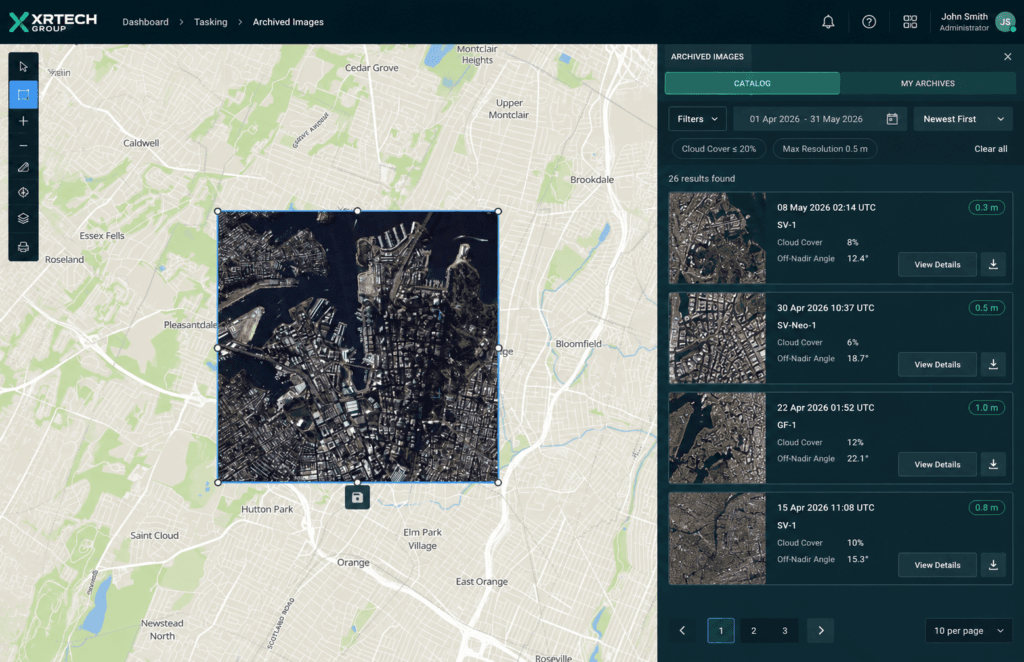
For anyone who uses satellite images, the boom is good news. More imaging satellites mean each place on Earth gets photographed more often, so recent images are easier to find and new captures can be scheduled sooner. How often a satellite comes back to the same spot is called revisit time, which we explain in our guide to spatial vs temporal resolution. Constellations such as SuperView Neo now image the same city several times a day at 30 cm detail.
Radar satellites add even more coverage, because they see at night and straight through clouds. Learn how that works on our page about SAR satellite imagery. If you need a fresh image of a specific site, you can order a new capture through satellite tasking, and our guide on how to interpret satellite images shows you how to read it.
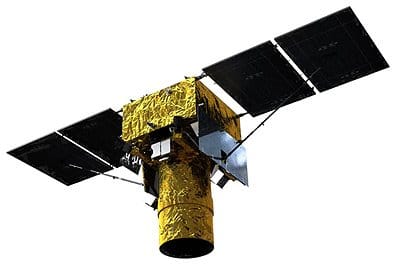
High-resolution constellations like SuperView Neo revisit the same place several times a day.
Need Satellite Imagery for Your Project?
XRTech Group supplies archive and new tasking imagery from optical, radar and hyperspectral satellites around the world, down to 30 cm. Tell us your area and what you need to see, and we will match you with the right satellite, resolution and capture date.
Frequently Asked Questions
How many satellites have ever been launched?
About 27,490 satellites have been placed into Earth orbit since Sputnik 1 in 1957, carried by about 7,320 successful rocket launches (ESA, 31 July 2026). About 18,840 of them are still in space, and roughly 15,900 still work. The rest have fallen back and burned up.
How many satellites are in space in total, including debris?
About 16,900 working satellites and roughly 2,900 dead ones orbit Earth. Space surveillance networks track about 47,140 objects in total, including rocket bodies and debris, and ESA's models estimate about 1.5 million pieces from 1 to 10 cm and about 230 million smaller ones.
How many satellites will be in orbit by the end of 2027?
If the current pace of about 2,700 to 3,500 net new working satellites a year continues, there will be roughly 20,000 to 21,500 active satellites by the end of 2027. Faster Starship launches and the build-out of Amazon Leo, Guowang and Qianfan could push the number higher.
Can you see satellites from the ground?
Yes. On a clear night away from city lights you can often spot slow, steady moving dots in the first hour or two after sunset or before sunrise. The International Space Station is the brightest, and a fresh batch of Starlink satellites can look like a string of pearls. Free sites such as Heavens-Above show when they pass over you.
Can satellites crash into each other?
Yes, but it is rare. The best-known case was in February 2009, when the working Iridium 33 and the dead Russian Cosmos 2251 collided about 790 km above Siberia and created thousands of debris pieces. Today operators, Starlink above all, steer their satellites out of the way of predicted close approaches many thousands of times a year.
How many satellites are in space beyond Earth's orbit?
Only a few dozen. Almost every satellite circles Earth. The rest are probes orbiting the Moon, Mars or the Sun, space telescopes such as James Webb parked far from Earth, and a handful of spacecraft, like the two Voyager probes, that are leaving the solar system.
Does Earth have any natural satellites besides the Moon?
No. The Moon is Earth's only lasting natural satellite. Now and then a tiny asteroid is caught for a few weeks or months, and astronomers call it a mini-moon, but these visitors always drift away again.
How long does a satellite stay in orbit?
It depends on its height and design. Starlink satellites fly low and are built to be retired after about five years, then fall back and burn up. Geostationary satellites often work for 15 years or more, then are moved to a graveyard orbit where they stay almost forever.
Who keeps track of all the satellites?
The US Space Force runs the largest tracking network and shares its data through the Space-Track website. ESA and other national agencies run their own radars and telescopes, and private companies add more. Public catalogs such as CelesTrak then repackage the data so anyone can use it, and researchers such as Jonathan McDowell keep independent records.
What was the first satellite ever launched?
Sputnik 1, launched by the Soviet Union on 4 October 1957. It was a shiny metal ball about 58 cm wide with four long antennas. It sent out simple radio beeps and circled Earth for about three months before it fell back and burned up.
Sources and How We Count
Every number on this page comes from a public source that you can check. We review the figures as new counts are published and date each one, because satellite numbers go out of date within weeks.
- Jonathan McDowell, Satellite Statistics: active satellites and launch totals
- CelesTrak active satellite catalog: counts by orbit, constellation and country
- ESA Space Environment Statistics: satellites in space, debris and launches
- ESA Space Environment Report: debris trends and collision risk
- Space-Track: US Space Force tracking catalog
- GPS.gov: GPS constellation status
- Union of Concerned Scientists Satellite Database: historical counts

Mustafa Jawaad
General Manager, XRTech Group
Mustafa helps governments and critical industries get satellite and UAV data in days rather than weeks, from archive search and new satellite tasking to processed maps, so teams can plan infrastructure faster and with less risk. Connect on LinkedIn.